
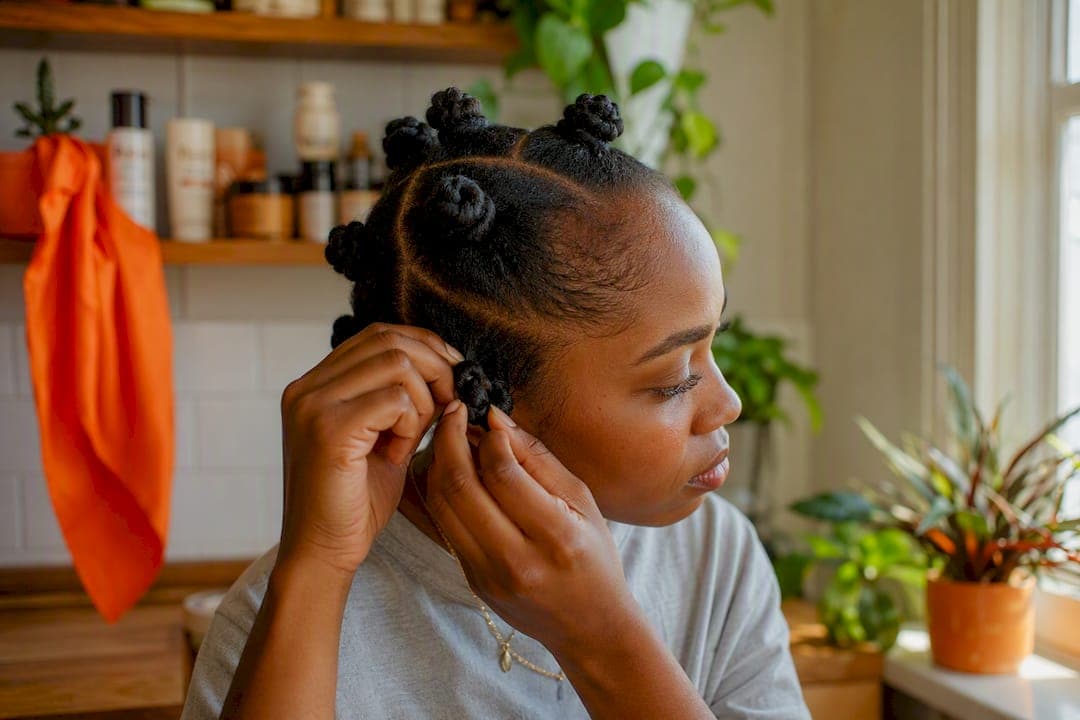
Bantu knots are a heat-free protective style made by twisting sections of hair and winding them into coiled buns, and they work for every curl type from coily to wavy. Pick your variation with three quick rules: mini knots for defined curls or shorter hair, classic knots for medium-length hair and everyday versatility, and chunky knots for a bold statement or a faster install. All three deliver the same two-in-one payoff: your hair stays protected while it's up, and you get heat-free curls when you take it down. Start with hair that's clean, conditioned, and damp, not soaking, for the best hold.
- Mini knots suit shorter hair or anyone seeking defined curls.
- Classic knots offer a balance of speed and versatility suitable for medium-length hair.
- Chunky knots save time and create a bold visual look.
Key Takeaways
Bantu knots work because knot size controls curl outcome, damp well-prepped hair controls hold, and gentle winding controls scalp health.
| Point | Details |
|---|---|
| Choose size by goal | Mini for tight curls, classic for versatility, chunky for speed and statement looks. |
| Prep hair damp, not wet | Clean, conditioned, detangled, and damp hair gives the strongest hold and definition. |
| Twist before you wind | A two-strand twist under each knot reduces tangling and creates a sleeker finish. |
| Protect tension, not just moisture | Stack wraps higher instead of pulling tight at the root to avoid edge and scalp damage. |
| Preview before installing | Use a virtual try-on to test knot scale and placement on your own photo first. |
Table of Contents
- Bantu Knots Styles to Try, From Classic to Statement-Making
- How to Set Bantu Knots at Home, Step by Step
- Personalize Your Look With Parts, Braids, and Accessories
- Keeping Bantu Knots Fresh Night After Night
- What Your Knot-Out Will Actually Look Like
- Preview Your Bantu Knots Before You Commit
- What We Got Wrong About Bantu Knots for Years
- Frequently Asked Questions
- Sources
Bantu Knots Styles to Try, From Classic to Statement-Making
The Zulu people of Southern Africa originated Bantu knots as a way to tuck hair ends away from friction and manipulation, and that protective function still drives every variation below.
1. Classic all-over knots. Best for medium to long natural hair. Uniform rows of knots across the whole head give a clean, symmetrical look. No braiding base needed, just consistent sectioning.
2. Mini knots. Best for shorter hair or fine textures. Dozens of small knots create a textured, almost sculptural silhouette, and the knot-out produces the tightest curl pattern of any size.
3. Chunky crown knots. Best for thick, long hair or anyone short on time. Fewer, larger knots mean a quicker install and a looser, wavier knot-out.
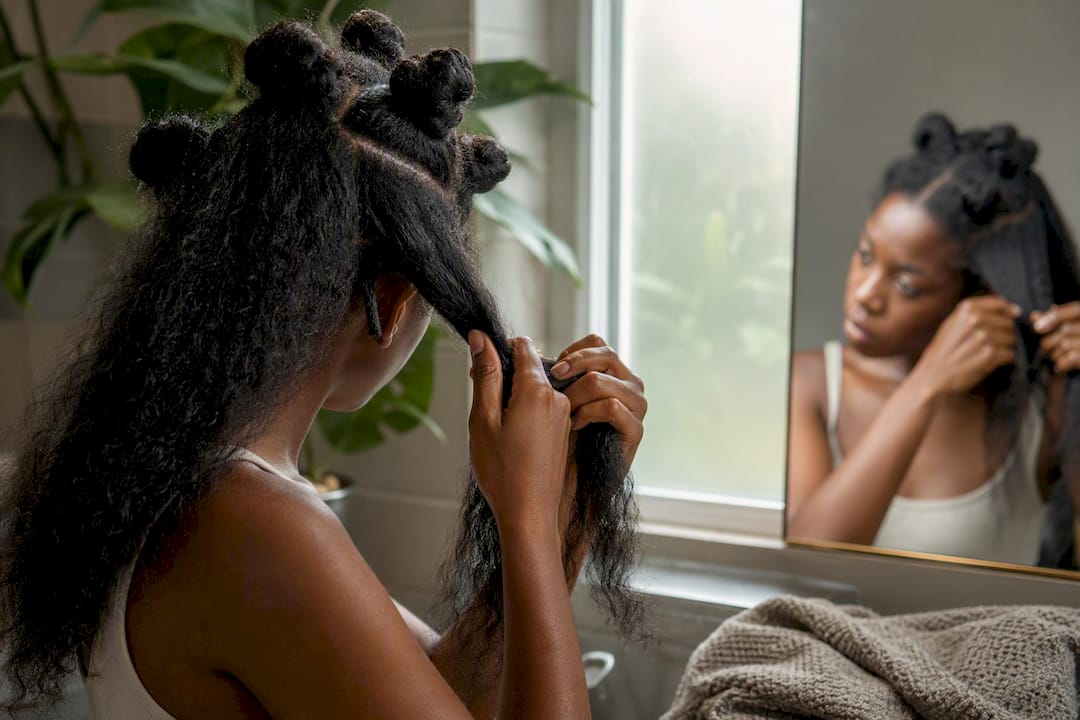
4. Stacked trio knots. Best for those who want dimension without full coverage. Three knots stacked at the crown or nape create a focal point rather than an all-over pattern.
5. Half-up, half-down knots. Best for anyone who wants length left out for movement. Knots on top, loose curls or twists below, split the protective and expressive halves of the style.
6. Braided-part knots. Best for longevity seekers. Cornrows feed into each knot base, which holds the shape longer and reduces edge stress.
7. Knots with extensions. Best for those wanting extra length or volume. Adding extensions changes drying time and requires a sturdier base twist to anchor the added hair.
8. Color or highlight knots. Best for showing off a fresh dye job. Bright color pops even more once knots unravel into curls, since the twist pattern catches light differently than straight strands.
9. Wire-wrapped knots. Best for editorial or event looks. Thin wire coiled around the base adds structure and lets knots hold unusual shapes.
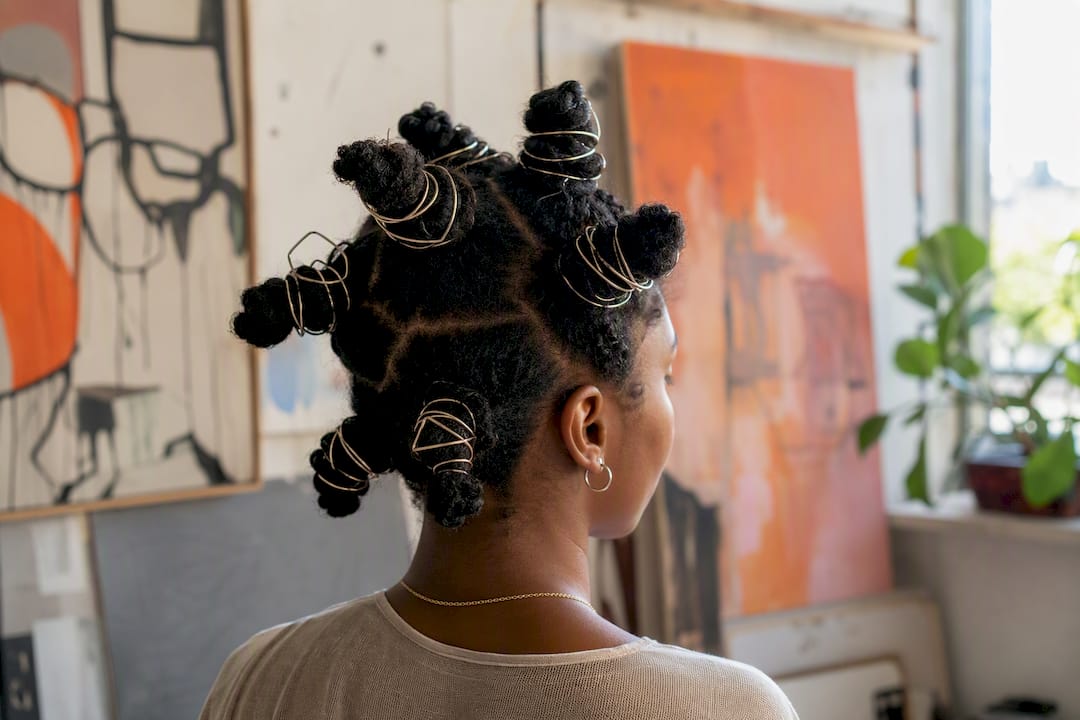
10. Bead-adorned knots. Best for a playful, textured finish. Beads threaded onto the ends or base add sound and movement, similar to childhood styles many naturalistas grew up with.
11. Bob-length knots with front detail. Best for shorter natural hair. A few knots framing the face over an otherwise loose bob keep things low-maintenance.
12. Locs with knots. Best for loc wearers wanting a change. Individual locs get wound into knot shapes instead of twisted strands, offering the same protective benefit without unraveling actual locs.
Pro Tip: Match knot scale to your edges. Tiny knots pulled too close to the hairline put repeated tension on your most fragile hair, so keep mini knots away from the perimeter and save that scale for the crown and back.
How to Set Bantu Knots at Home, Step by Step
Gather your supplies first: a leave-in conditioner for moisture, an edge-control or holding gel for definition, a rat-tail comb for clean sections, and bobby pins or small hair ties to secure each knot.
- Leave-in conditioner keeps strands hydrated through the drying process.
- Gel adds hold so knots keep their shape overnight.
- Pins anchor knots that are too small to tuck under themselves.
Start with hair that's clean, conditioned, and fully detangled. Stylists recommend working with damp hair rather than soaking wet, since damp strands hold the twist better and dry faster.
- Section your hair into even parts based on your chosen knot size, from tiny squares for mini knots to large triangles for chunky ones.
- Two-strand twist each section before winding. This step reduces tangling and produces a noticeably sleeker knot than winding a single strand.
- Wind the twisted section around its own base, coiling it flat against the scalp.
- Secure the end by tucking it under the coil or pinning it in place.
- Choose your drying method: air dry for the most definition, sit under a diffuser to speed things up, or sleep on it overnight for a morning knot-out.
For a wearable style, let knots set at least a few hours; for the best knot-out curls, leave them overnight or longer.
Pro Tip: Winding too tightly at the root causes tension, not better hold. Build volume by stacking wraps higher on themselves instead of pulling the base taut, which spreads tension across more hair and protects your scalp.
Personalize Your Look With Parts, Braids, and Accessories
A grid part reads clean and orderly, a star part radiates dramatically from the crown, and diagonal parts add movement without extra effort.
- Cornrow bases feeding into each knot hold the shape longer and take pressure off your edges.
- Wire wraps add sculptural structure but require careful removal to avoid snagging.
- Beads and pins personalize the look but add a few extra minutes to installation and takedown.
- Silk scarves aren't styling accessories, but they're essential once the look is finished.
Extensions change the equation entirely. They add length and volume, but they also mean a sturdier base twist, longer drying time, and a gentler takedown to protect your natural hair underneath.
Keeping Bantu Knots Fresh Night After Night
Wrap knots in a silk or satin scarf, or sleep under a silk bonnet, to stop friction from unraveling your edges overnight. Light hydration matters too: a water-based spritz or a small amount of oil on the ends keeps knots from drying out, but soaking them undoes the set.
- Rewrap any knot that's loosened rather than leaving it half undone all day.
- Touch up edges with a small amount of gel and a soft brush.
- Redo the full style once knots feel dry, frizzy, or overly loose at the base, typically after a week or two.
Pro Tip: If your scalp feels tight or tender after installation, that's a warning sign, not something to push through. Loosen the knot immediately rather than waiting for it to "settle."
What Your Knot-Out Will Actually Look Like
Knot size determines your curl pattern almost entirely. More sections and smaller knots produce tighter, springier curls, while fewer, jumbo knots relax into loose, beachy waves. Mixing sizes across your head gives a textured, multi-dimensional result that reads less uniform than an all-one-size set.
- Rub a small amount of oil into your palms before touching any knot.
- Gently untwist each coil rather than pulling it apart.
- Separate curls minimally with your fingers to avoid frizz.
- Lift at the roots and shape with your hands, not a brush.
A well-set knot-out typically holds its shape for several days before it needs a refresh. The tighter the original knots, the longer the curl pattern tends to last, since smaller coils have more twist locked into each strand.
Preview Your Bantu Knots Before You Commit
Deciding between mini, classic, or chunky knots gets a lot easier when you can actually see the result on your own face first. Stylemycrown's AR try-on tool lets you test knot scale, placement, and accessory combinations across 528 curated styles built specifically for Black hair textures, using 10 complimentary credits before you spend a dime.
- Upload a photo and try mini, classic, and chunky knots side by side.
- Test wire wraps, beads, or color changes without touching your actual hair.
- Save screenshots to show your stylist exactly what you want, or browse the stylist catalog directly for professional installation.
What We Got Wrong About Bantu Knots for Years
The beauty industry treated Bantu knots as a two-step trick: install, then unravel for curls. That framing undersells the style. The real value is in the range, from mini knots that read as everyday texture to wire-wrapped chunky knots that hold up on a red carpet.
What conventional tutorials underplay is tension. Most damage from this style doesn't come from the twist itself, it comes from winding too tight at the root out of a mistaken belief that tighter equals longer lasting. It doesn't. Distributed tension across a taller coil holds just as well and spares your scalp.
If there's one thing to prioritize, it's matching knot size to your actual hair goals before you start, not mid-install. That's exactly the kind of decision a virtual preview solves better than a mirror and guesswork ever could.
Frequently Asked Questions
Do Bantu knots work on all hair types? Yes. The style has suited every curl type since its origins with the Zulu people of Southern Africa, from coily to loosely wavy textures.
Should I set Bantu knots on wet or dry hair? Damp hair, not soaking wet. Fully saturated hair takes too long to dry and can loosen the knot before it sets, while completely dry hair won't hold the twist as well.
How long do Bantu knots take to dry? It depends on your knot size and drying method. Air drying takes the longest but gives the best definition, while sleeping on knots overnight is the most common approach for a morning takedown.
Is a Bantu knot actually a knot? Not technically. The style is created by twisting and winding hair into a coiled bun rather than tying a true knot, which is why practitioners recommend winding gently instead of pulling tight.
Can I add extensions to Bantu knots? Yes, and many stylists do to add length or volume. Just expect a sturdier base twist and longer drying time compared with knots on natural hair alone.
Sources
- Iowa State Digital Press — cultural/historical coverage of Bantu knots
- Byrdie — 24 Bantu knot hairstyles and stylist tips
- CurlyNikki — Bantu knots tutorial and knot-out tips
- All Things Hair — technical note on technique