
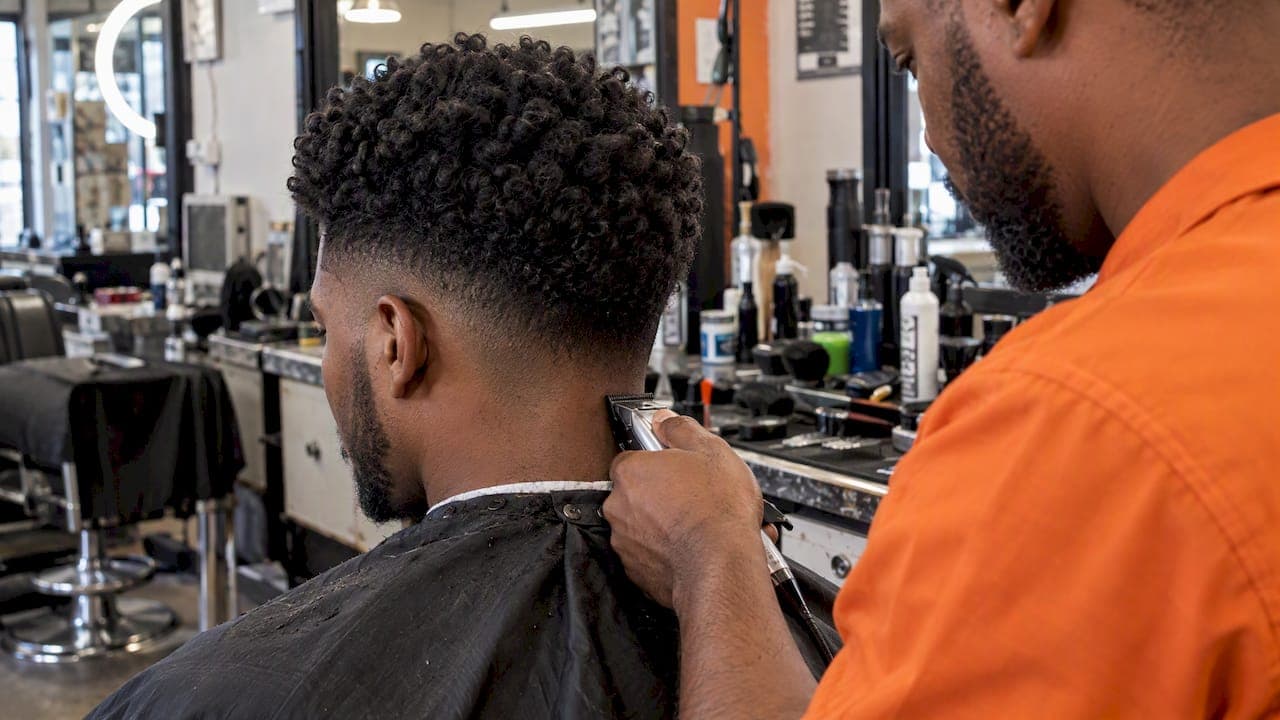
For most men with curls, a low-to-mid taper preserves your curl silhouette while keeping the sides clean and manageable. Start with a mid taper if you want presence, a low taper if you prefer subtlety, and ask your barber for a shadow finish at the neckline rather than a hard line. We built this guide with Style My Crown because the right fade should photograph as good as it feels.
TL;DR:
- A low taper suits longer curls and rounder faces, while a high taper creates stronger contrast and works best with dense, shape holding coils.
- High contrast fades need refreshing every two to three weeks, while shadow or lower contrast tapers can usually go three to four weeks.
- Tell your barber where the fade starts, request a shadow neckline without a hard line, and bring reference photos to clarify the finish.
- Because tight coils shrink as they dry, consider curl pattern when choosing top length and ask for a dry or nearly dry cut.
Table of Contents
- Why a taper fade flatters curly hair
- Low, mid, and high taper: which one fits your curls?
- 30+ curly taper fade ideas to show your barber
- How to tell your barber exactly what you want
- How often to get your taper refreshed
- Styling by curl type: what actually works
- Considerations for hair density and curl pattern
- Common barber techniques for blending tapers on curly hair
- Aftercare tips to prevent curl damage post-fade
- What we're seeing in curly fades right now
- Preview your next cut before you commit to it
- FAQ
- Sources
Why a taper fade flatters curly hair
Curls take up space. That's the whole point of them, and it's exactly why a taper fade works so well when a full fade can leave you feeling boxed in.
A full fade shortens hair down to skin or near skin at the sides and back, which creates sharp contrast but also removes the gradual buildup that frames a curly crown. A taper does something gentler. It shortens hair progressively from the top down, so you keep more length through the sides and back while still getting a clean transition near the hairline.
That matters for curls because volume lives at the roots and temples. Remove too much too fast there, and your curls lose the frame that makes them look intentional instead of accidental. A taper respects that frame.
Here's what a taper does for curly hair specifically:
- Reduces bulk at the temples and neck without flattening the crown's natural lift
- Keeps the transition soft, so regrowth between cuts looks less noticeable
- Preserves enough length on the sides to let curls breathe instead of looking shaved down
Choose subtle when you want your curls to stay the focal point. Choose high contrast when you want the fade itself to be part of the style, which tends to suit tighter coils and shorter curl patterns that hold a crisp line well.
Low, mid, and high taper: which one fits your curls?
Fade height changes everything about how a cut reads, and curly hair makes those differences even more visible because of the volume up top.
- Low taper. The fade starts just above the ear, close to the hairline, and fades into the neckline. It's the most forgiving option for first-timers and reads as polished rather than dramatic. Low tapers suit longer curl lengths on top, rounder face shapes that benefit from minimal width at the sides, and anyone who wants a style that grows out gracefully between visits.
- Mid taper. The fade starts around the middle of the side of the head, roughly level with the temple. This is where most guys land because it balances presence with versatility, flattering a broader range of face shapes while still giving the top room to show off curl definition. A taper fade at mid height is often described as the most universally flattering starting point for curly and coily textures alike.
- High taper. The fade begins near the top of the head, close to where length starts, creating much more contrast between the sides and the crown. This suits men who want their curls to look sharper against short, tight sides, and it tends to work best with denser curl patterns that hold shape well against that contrast.
Pro Tip: Ask for a "shadow taper" instead of a "skin taper" if you want the fade to fade into very short hair rather than bare skin. It looks softer in photos and grows out with far less visible demarcation.
Skin tapers go all the way to the skin at the lowest point of the fade, giving maximum contrast. Shadow tapers stop at a very short buzzed length instead, which many curly-haired men prefer because it ages better between cuts and avoids the stark line that can look harsh against dense curl texture.
Drop fades and burst fades are two variants worth knowing. A drop fade curves downward behind the ear instead of staying level, which can add extra visual lift to a curly crown. A burst fade curves around the ear in a rounded shape, often paired with longer top curls for a style that looks sculpted from every angle.
30+ curly taper fade ideas to show your barber
Sometimes the fastest way to get the cut you want is to point at a photo and say "like this, but mine." Here are specific combinations worth bringing to your next appointment, organized by curl type so you can find your starting point.
For tight coils and 4C textures:
- High taper with a tight afro on top, kept short and rounded for a clean geometric shape.
- Low taper with a flat-top afro, which adds height while keeping the sides understated.
- Mid taper with a sponge-twist top, giving defined texture without needing daily styling.
- High taper with a shape-up line at the front hairline for extra sharpness.
- Low taper with a curl sponge fade, where the top blends gradually into tighter coils near the crown.
For loose curls and wavy-to-curly textures:
- Mid taper with longer curls on top left loose, a classic combination that balances structure and movement.
- Low taper with a textured fringe swept to one side.
- Mid taper paired with a curly quiff, brushed up and back for height.
- Low taper with a side part cut into slightly longer curls.
- High taper with a curly pompadour, which creates dramatic contrast between the sharp sides and soft, voluminous top.
For defined, spring-type curls:
- Mid taper with a curly crop, kept short enough that individual curls stay defined without weight pulling them down.
- Low taper with a textured curly fringe that falls just above the brow.
- High taper with a tapered curl afro, rounded and compact.
- Mid taper with a curly undercut look, where the contrast is sharper than a traditional taper but softer than a full undercut.
- Low taper with loose ringlets left long on top for movement.
Afro-specific taper combinations:
- Low taper afro, where the sides fade gently into a full, rounded afro shape.
- Mid taper afro with a sharper part line cut into the side.
- High taper with a compact afro, best suited to denser curl patterns that hold a rounded shape without extra product.
- Drop fade afro, curving behind the ear for added dimension.
- Burst fade afro, rounding fully around the ear for a sculpted finish.
Temple fade and design combinations:
- Mid taper with a temple fade only, leaving the back longer for a more relaxed look.
- Low taper with a subtle part line shaved into the side.
- High taper with a geometric design at the temple, popular for guys who want a bit of personal flair.
- Mid taper with a curly mohawk, where the sides fade down dramatically into longer curls down the center.
- Low taper with a textured crop and disconnected fringe.
Short curly fade combinations for low-maintenance days:
- High taper with a short curl buzz, ideal for hot climates or active lifestyles.
- Low taper with a short curly crop, barely any length on top but still textured.
- Mid taper with a Caesar-style curly cut, short and brushed forward.
- High taper with a curly induction-style cut, very short all over with defined coil pattern still visible.
- Low taper with a curly skin fade accent at the sideburns only.
A few more worth considering:
- Mid taper with a curly French crop, textured fringe with sharp sides.
- High taper with an asymmetrical curly top for a modern, editorial feel.
- Low taper with a curly bro flow, slightly longer and swept back.
- Drop fade with a loose curl top, left natural without heavy product.
When you find two or three of these that catch your eye, screenshot them. If you've run any of these looks through a virtual try-on tool first, bring that result along too. Barbers work faster and more accurately from a photo of your actual face shape than from a stock image of someone else's.
How to tell your barber exactly what you want
Miscommunication at the chair is almost always a language problem, not a skill problem. Barbers report that vague descriptions are the single biggest source of a fade that doesn't match what the client pictured, and that reference photos paired with clear fade-start language dramatically cut down on that gap.
Use this kind of script when you sit down:
- Name the fade height first: "Mid taper, starting at the temple."
- Specify the finish: "Shadow taper at the neckline, not skin, no hard line."
- Give a top-length reference: "Keep about two inches on top so my curls still have room to move."
- Name the variant if you want one: "A slight drop fade behind the ear."
- Set the contrast expectation: "I want it blended, not high contrast."
Guard numbers help, but treat them as a starting conversation rather than a fixed rule. Curl density and shrinkage mean a guard length on a curly texture often looks shorter once dry than the same guard would on straight hair, so a number two guard on tight coils can read differently than a number two on loose waves. Mention your curl pattern and let your barber adjust from there.
Pro Tip: Before the final blend, ask your barber to let you check the fade angle in a handheld mirror. Catching an uneven line while there's still time to fix it is far easier than noticing it at home.
Before the clippers come out, confirm four things out loud: where the fade starts, how high it sits on the temple, how the neckline finishes, and how much contrast you want between the sides and the top. Thirty seconds of clarity here saves a month of regret.
How often to get your taper refreshed
Fades grow out faster than people expect, and curly hair can make that regrowth look uneven sooner because of how density sits around the fade line.
For crisp, high-contrast tapers, plan on a visit every two to three weeks. Barbers recommend this cadence specifically to keep edges sharp, since the line between faded and full-length hair is the first part of any cut to soften. Shadow tapers and lower-contrast fades are more forgiving and can stretch to three or four weeks between visits.
Between appointments, a few product habits keep things looking intentional:
- A leave-in conditioner after every wash keeps curls hydrated and reduces frizz that can make a fade line look blurry.
- A lightweight curl cream defines curl pattern on top without weighing it down or collapsing volume.
- A matte clay or pomade worked lightly into the fade area smooths flyaways at the sides without adding shine that draws attention to regrowth.
A barber-recommended 2 to 3 week trim cadence keeps fade lines looking sharp between full cuts. That window is tight enough to catch regrowth before it blurs the taper's edge, which is especially useful if you've chosen a high-contrast style.
At home, a soft brush or pick can redefine the shape at the crown on days two and three after a wash. When the sides start looking fuzzy instead of clean, that's your sign to book the next appointment rather than wait it out.
Styling by curl type: what actually works
Shrinkage changes how long your top length looks once it dries, and that affects how a fade height reads day to day.
- Loose waves: Shrinkage is minimal, so a top length of two to three inches holds visible length. Pair with a low or mid taper and a lightweight curl cream to define waves without stiffness.
- Defined curls (type 3): Expect moderate shrinkage. A top length of two to four inches dries shorter but keeps spring. Mid tapers work well here, and a curl-defining gel applied on damp hair locks in pattern before it dries.
- Tight coils (type 4a/4b): Shrinkage can be significant, so what looks like three inches wet may sit closer to one inch dry. High or mid tapers pair well with this density, and a creamy leave-in applied before any drying method helps prevent frizz.
- 4C hair: Expect the most shrinkage of any pattern. Low or high tapers both work depending on desired contrast, and a curl butter or heavier cream helps stretch and define coils without disrupting their natural zigzag shape.
Across all patterns, apply product to damp rather than fully dry hair. It distributes more evenly and holds curl definition longer through the day.
Considerations for hair density and curl pattern
Density and curl pattern together decide how a taper fade will actually look once it grows out, not just on the day you leave the barbershop.
Thicker, denser hair holds a fade line longer because there's more hair mass pushing against the transition point. If your density is high, a high or mid taper tends to stay crisp longer, giving you a bit more flexibility between visits. Thinner density, by contrast, shows regrowth and unevenness faster, so a low taper or shadow finish often looks better for longer because there's less contrast to maintain.
Curl pattern affects how the fade blends into the length above it. Tighter coils tend to create a more abrupt visual transition from fade to full length, since the coil pattern adds volume right at the point where the taper ends. Looser curls blend more gradually, since there's less sudden volume change.
If you're also managing thinning edges or recession at the hairline, a lower-tension style approach around the taper line can help protect those areas while the fade grows in, rather than putting additional stress right at the hairline during styling.
The honest move here is to talk density and pattern through with your barber before they pick up the clippers, since the same fade height can look completely different depending on what you're working with underneath.
Common barber techniques for blending tapers on curly hair
A taper that looks effortless usually took real technique to get there, especially on curly texture where hair behaves differently wet versus dry.
Most barbers work curly tapers dry, or close to it, because curls can shrink up significantly once they're released from water weight. Cutting curly hair wet risks a fade that looks uneven once it dries and springs back into shape.
Clipper-over-comb is a common technique for blending the transition zone, letting the barber control exactly how much length is removed at each pass rather than relying purely on guard length. For the softest transitions, many barbers will switch guard sizes gradually rather than jumping straight from a longer guard to a much shorter one, building the fade in smaller increments.
Shears are often brought in near the top of the fade, where it meets longer length, to soften the line further and blend curl volume into the faded sides without a visible step. This technique matters more on curly hair than straight hair, since curls can make an abrupt transition more visible due to their natural volume.
Barbers emphasize that a seamless transition with no visible lines or jumps is the mark of a well-executed taper, regardless of texture. That's a useful benchmark to check for before you leave the chair.
Aftercare tips to prevent curl damage post-fade
The cut is only half the job. What you do in the days after matters just as much for keeping curls looking healthy and the fade looking sharp.
Avoid washing immediately with hot water, which can strip natural oils right when your scalp and hairline are more exposed than usual along the fade line. A lukewarm rinse with a sulfate-free cleanser is gentler on both skin and curl pattern.
Sleep on a satin or silk pillowcase, or wrap your hair before bed. Cotton pillowcases pull moisture from curls and can cause frizz right at the crown, undoing some of the definition your barber worked to create.

Keep the fade area moisturized too. Skin along a fresh taper can get dry or irritated, especially with a skin or shadow finish, so a light, fragrance-free lotion applied to the sides helps avoid flaking that draws attention to the fade line.
Resist the urge to touch up the fade yourself with home clippers between visits. It's one of the fastest ways to create an uneven line that a professional then has to correct. For more general hair care habits worth building into a routine, consistency matters more than intensity. Small, repeated habits protect curl health far better than occasional deep treatments.
What we're seeing in curly fades right now
Fades aren't going anywhere in 2026. What's shifted is how personal they've become. Fewer guys are walking in asking for "the same as last time" and more are bringing specific references, often pulled from a style they previewed on their own face first.
That shift makes sense to us. A fade is a commitment you wear every day for weeks, so the choice should feel like yours, not a guess. Reference photos and try-on tools exist to close that gap between what you picture and what actually works with your face and your curls. Use them before you sit down, not after you second-guess the mirror.
— Christelle
Preview your next cut before you commit to it
Choosing a fade height sight unseen is a gamble, and we'd rather you walk into the barbershop certain. With a virtual try-on tool, you can preview low, mid, and high tapers on your own photo before a single curl gets cut.
The catalog includes many styles curated specifically for Black and textured hair, and face data is processed securely without retention beyond the session. Try your options and save the one that fits, then bring it straight to your next appointment through our pricing plans, starting at $17.48 per week.
FAQ
What is the Gen Z boy haircut called?
There isn't one single official name, since the style varies by curl type and region, but many versions combine a mid or low taper fade with a textured, slightly longer top, sometimes styled into a curly fringe or quiff. Ask your barber for a "curly textured crop with a mid taper" as a reliable starting reference.
Is a high taper fade good for curly hair?
Yes, a high taper works well for curly hair, especially denser curl patterns that hold a rounded or compact shape against the added contrast. It creates a sharper, bolder look than a low or mid taper, so it suits readers who want their fade to stand out rather than blend quietly into the hairline.
Are fades out of style in 2026?
No, fades remain a versatile, widely worn style, and taper fades specifically continue to be used by public figures for a clean, understated look that keeps top volume intact. What's changed is a trend toward more personalized fade choices rather than a single dominant style.
What is the best taper fade to get?
For most curly-haired men, a mid taper offers the most universally flattering balance of presence and versatility across different face shapes. A low taper suits subtlety and longer top curls, while a high taper suits those wanting maximum contrast against denser curl patterns.
Sources
- Everything You Need to Know About Fade Haircuts | GQ
- Taper Fade: How to Perfect It, According to the Pros | GQ Middle East