

Here are the top loc styles women choose in 2026, and who each one suits best. Scan the shortlist, save a few that catch your eye, and try them virtually before you sit in a stylist's chair.
We built this list around real texture differences and real maintenance tradeoffs, not just what photographs well. Every style below carries its own tension risk, its own upkeep rhythm, and its own answer to "will this actually work on my hair."
- Micro locs — thin, versatile, great for Type 3-4 hair wanting movement and updo options
- Tapered loc bob — short, face-framing, low daily maintenance
- Goddess/faux locs — reversible, protective, ideal for testing length or color without commitment
- Half-up half-down — casual to semi-formal, works on starter or mature locs
- Loc ponytail — quick, professional-friendly, minimal tension when done loosely
- Jumbo locs — bold, fewer strands, faster styling time, more weight on the scalp
- Freeform locs — lowest maintenance, least uniform, best for those avoiding retwists
- Mohawk locs — dramatic, event-ready, needs careful edge protection
Try StyleMyCrown's virtual catalog before booking anything permanent. Full examples, starter methods, and maintenance rules follow below. One caution up front: any style that pulls tight at your hairline for hours at a time is a style to modify, not to force.
Key Takeaways
Choosing the right loc style comes down to matching your texture and maintenance tolerance to a technique, then protecting your hairline with low-tension styling regardless of which look you pick.
| Point | Details |
|---|---|
| Match method to texture | Two-strand twists suit looser curls; comb coils and interlocking suit tighter Type 4 textures. |
| Faux locs reduce risk | Goddess and butterfly locs let you test color or length without touching your natural hair. |
| Tension is the real enemy | Loose anchors, fabric ties, and padding near the temples prevent traction alopecia. |
| Retouch on a schedule | Most mature locs need retwisting every four to eight weeks, starter locs washed more often. |
| Preview before committing | Stylemycrown's virtual catalog lets you test 528+ styles on your own photo before booking a stylist. |
Table of Contents
- Locs Styles for Women: The Full Style Gallery
- What Starter Loc Method Fits Your Hair Texture?
- How Do You Style Locs Without Adding Tension?
- What Loc Colors and Textures Are Trending in 2026?
- How Often Should You Wash and Retighten Locs?
- Can You Preview Loc Styles Before Getting Them Done?
- A Personal Note on Styling Locs and Staying True to Yourself
- Ready to See These Loc Styles on Yourself?
- Frequently Asked Questions
- Sources
Locs Styles for Women: The Full Style Gallery
Consider this the reference sheet you screenshot before your next salon visit. Every entry below names the hair type it favors and whether the look is temporary or permanent, because that distinction changes everything about how you commit to it.
Reversible styles use extensions or crochet methods on top of your natural hair or starter locs. You can remove them. Permanent styles describe your actual locs, meaning the look changes as your hair grows and matures, and it stays until you cut or retexture it.
- Micro locs. Pencil-thin sections give you the flexibility to wear buns, braids, or loose waves that mimic natural curl patterns. Best for Type 3 to fine Type 4 hair with patience for a longer install. Permanent.
- Sisterlocks. A trademarked micro-sectioning method using a specialized tool, prized for uniform grid parts and styling range. Best for readers who want salon-level precision and don't mind a higher upfront cost. Permanent.
- Tapered loc bob. Shorter in the back, slightly longer up front, framing the jaw. Works beautifully on Type 4 hair and flatters most face shapes. Permanent, but achievable through strategic cutting at any loc age.
- Goddess locs. Faux locs with curly, wavy ends that soften the look, often installed with pre-looped extension hair. Suits any texture since the extensions do the work. Reversible.
- Butterfly locs. A distressed, textured variation of faux locs with a wispy, undone finish. Popular for its lighter feel and quicker two-day install. Reversible.
- Boho locs. Faux locs paired with loose curly pieces woven throughout for a bohemian, unstructured effect. Great for readers who want faux locs without the uniform, "new install" look. Reversible.
- Soft locs. Made from silky, pre-curled extension hair that mimics the softness of natural curl clusters more than traditional faux locs. Lightweight and popular for warmer climates. Reversible.
- Comb coil starter locs. Small, uniform coils created with a rat-tail comb, common on shorter natural hair beginning the locking journey. Best on Type 4 textures with tighter curl patterns. Permanent (starter phase).
- Two-strand twist starter locs. Two sections of hair twisted around each other until they mat into a loc. Works on nearly any texture, including looser Type 3 curls that resist coiling. Permanent (starter phase).
- Interlocked locs. A tool loops each new-growth section through itself instead of twisting, keeping roots exceptionally neat between retouches. A strong option for readers with thinning edges, since it uses less pulling motion. Permanent.
- Freeform locs. No manipulation, no retwisting, just natural matting over time. The lowest-maintenance option and the most organic-looking result, though the shape is unpredictable. Permanent.
- Jumbo locs. Fewer, thicker sections that install fast and style even faster. Heavier per strand, so tension at the root needs extra attention. Permanent.
- Loc top bun. Gather locs high, secure loosely, and let a few face-framing pieces fall. Works at any loc length past shoulder-grazing. Adaptable to either permanent or faux locs.
- Half-up half-down locs. The most forgiving everyday style, pulling weight off the nape while keeping length visible. Suits starter locs still finding their shape.
- Loc ponytail. A sleek, low-effort option for work or workouts. Keep the base loose. A tight ponytail elastic at the same spot daily is a textbook path to breakage.
- Braided loc updo. Two or three large locs braided together and pinned into a crown shape, popular for formal events. Best on mid-length to long locs.
- Mohawk locs. Sides pulled back or shaved, center locs left standing or braided into a raised strip. Editorial, striking, and increasingly requested for photo shoots and stage looks.
- Loc mohawk braid-out. A softer cousin of the mohawk, where center locs are braided instead of left loose, reducing strain on the surrounding hairline.
- Spiral locs. Achieved with flexi-rods or perm rods on faux or natural locs to create a corkscrew curl pattern from root to tip, a look Byrdie's short-style roundup highlights as one of the easiest at-home transformations.
- Loc twist-out bob. A short, textured bob created by twisting individual locs and releasing them for volume and curl definition, ideal for readers with locs at chin to shoulder length.
- Petal bun. Sections of locs looped and pinned to look like flower petals around a central bun. Works best on medium-length locs with some flexibility left in the ends.
- Colored accent locs. A handful of locs dipped, wrapped, or clipped in a contrasting shade, giving dimension without committing to a full-head color change.
What Starter Loc Method Fits Your Hair Texture?
Your starting technique matters more than any style you'll wear later, because it determines how your roots form, how fast your hair locks, and how much tension your edges absorb during the first year. Vogue's guide to Afro-textured loc styles notes that different curl patterns lock at genuinely different speeds, which is why a one-size method rarely works.
- Two-strand twists. Best for Type 3C to 4A hair. Twists hold their shape longer on looser curl patterns, giving the hair time to mat naturally.
- Comb coils. Best for tighter Type 4B to 4C textures, where the curl itself does most of the locking work once coiled.
- Interlocking. Suits fine or thinning hair since the technique distributes tension differently than twisting, though over-interlocking too frequently can itself strain the root.
- Palm rolling. A maintenance technique more than a starter method, used to smooth and re-coil sections between retwists.
- Backcombing. Creates faster, denser locking, often used on coarser textures that resist twisting alone.
- Sisterlocks. Works across textures but requires a certified consultant and a longer, pricier install.
- Faux or goddess locs. The texture-agnostic option, since extension hair does the locking work instead of your own strands.
Pro Tip: If you're not sure your hair type will lock fast, ask your loctician to start with a small test section behind your ear. You'll know within a few weeks whether your chosen method is taking hold.
Timelines vary widely by method and texture, but many locticians describe a rough arc where the first months are the "baby loc" phase and real maturation takes closer to a year or more, according to starter loc timeline guidance from TheTropicalBuzz. Treat any specific week count you read online as a loose estimate, not a guarantee, since coarser hair and finer hair simply do not lock on the same schedule.
How Do You Style Locs Without Adding Tension?
Every style on this list can be built two ways: one that respects your hairline, and one that quietly stresses it every single day. The difference usually comes down to how tightly you're gathering hair at the root, not the style itself.
- Sleek high bun. Gather locs loosely with a soft scrunchie, not a thin elastic. Twist once, pin the ends under, and leave a slight bit of give at the base rather than pulling flat against the scalp.
- Half-up pineapple. Section the top half only, secure with a fabric-covered band, and let the rest fall. Skip the double-wrap that yanks the crown tight.
- Twisted bob. Divide shoulder-length locs into large sections, twist two together, and pin loosely at the nape for a rounded silhouette.
- Braided ponytail. Braid three thick loc sections together before securing, which distributes weight across the braid instead of concentrating it at one elastic point.
- Petal bun. Loop individual locs into loose petal shapes and pin with bobby pins rather than tight thread wraps.
Pro Tip: Swap thin rubber elastics for fabric scrunchies or satin-lined clips, and add a folded strip of silk or a soft headband as padding anywhere a style pulls near your temples. Stylists consistently point to repeated tight styling as the leading driver of traction alopecia in updos and tight looks, and it's almost always avoidable with looser anchoring.
What Loc Colors and Textures Are Trending in 2026?
Warm-tone accents are dominating loc color this year: copper, caramel, and burnt-orange pieces woven through darker locs rather than full-head dye jobs. Textural trends lean into contrast, too, pairing sleek permanent sections with the deliberately undone look of butterfly or distressed faux locs.
- Warm-tone color accents on select strands, not the whole head, using extension hair or targeted dye.
- Ombré locs fading from natural root color into a lighter, warmer tip shade.
- Butterfly and distressed textures for a lived-in, less structured faux-loc finish.
- Goddess locs with curly ends for softer, more romantic styling.
- Tapered loc bobs as a lower-maintenance cut choice heading into the new year.
- Micro loc petal buns for formal or event styling.
Color is where the reversible-versus-permanent line matters most. Extensions and faux installs isolate your natural hair from dye entirely, which makes them the safer route for testing a shade before committing your actual locs to bleach or color, a point Marie Claire's loc styling guide reinforces when discussing faux locs as a low-risk way to trial a look. Jewelry and cuffs look striking clipped mid-shaft, but placing them at the root adds constant pulling weight exactly where you don't want it.
How Often Should You Wash and Retighten Locs?
Starter locs generally need washing every one to two weeks, since over-washing before the roots have matted can loosen fragile new growth. Mature locs can often stretch to every two to three weeks, depending on scalp oil production and activity level. Either way, a residue-free liquid shampoo beats anything waxy or heavy, which builds up inside the loc shaft over time and attracts lint.
- Retouch or retwist cadence typically runs every four to eight weeks; going longer isn't wrong for freeform wearers, but going shorter often is.
- Watch for scalp tenderness, visible thinning at the temples, or bumps at the root. These are early warning signs of tension-driven traction alopecia, not just "normal" tightness.
- Sleep in a satin or silk bonnet, or a loose pineapple wrap, to cut friction and frizz overnight.
- Keep edges lightly moisturized with a light oil rather than heavy gel buildup, which can flake and weigh down fine baby hairs.
- See a loctician if you notice a widening part, a receding hairline pattern, or locs that feel loose right at the scalp rather than at the tip.
The research on this is consistent: excessive, repeated tension at the hairline is the primary driver of long-term hair loss in loc wearers, far more than the locs themselves. Distributing weight across a style, and giving your scalp regular breaks from anything pulled tight, protects the hairline you'll still want in ten years.
Can You Preview Loc Styles Before Getting Them Done?
Yes, and skipping this step is how most loc regret happens. StyleMyCrown's style catalog lets you upload a photo and preview more than 528 curated styles built specifically around Black hair textures, using augmented reality instead of guesswork.
The workflow is simple: upload a clear photo, browse loc styles and color variations against your own face shape and hair texture, then save or share the ones that work as reference images for your loctician. Ten complimentary credits cover your first round of experimenting, so you can compare a tapered bob against goddess locs against a jumbo install before any scissors or extensions touch your hair.
- Reduces regret from committing to a length or color that doesn't suit your face shape.
- Gives your stylist a precise visual reference instead of a vague description.
- Lets you test bold trends, like warm-tone accents or a mohawk silhouette, with zero risk.
| Benefit | What it solves |
|---|---|
| Try before committing | Skips the guesswork of imagining a style on yourself |
| Texture-matched previews | Built around Black hair types, not generic templates |
| Shareable references | Gives your loctician a clear starting point |
A Personal Note on Styling Locs and Staying True to Yourself
Locs carry weight beyond hair. For a lot of us, they're identity, heritage, and a daily choice to show up as ourselves. That's worth honoring, and it's also worth protecting.
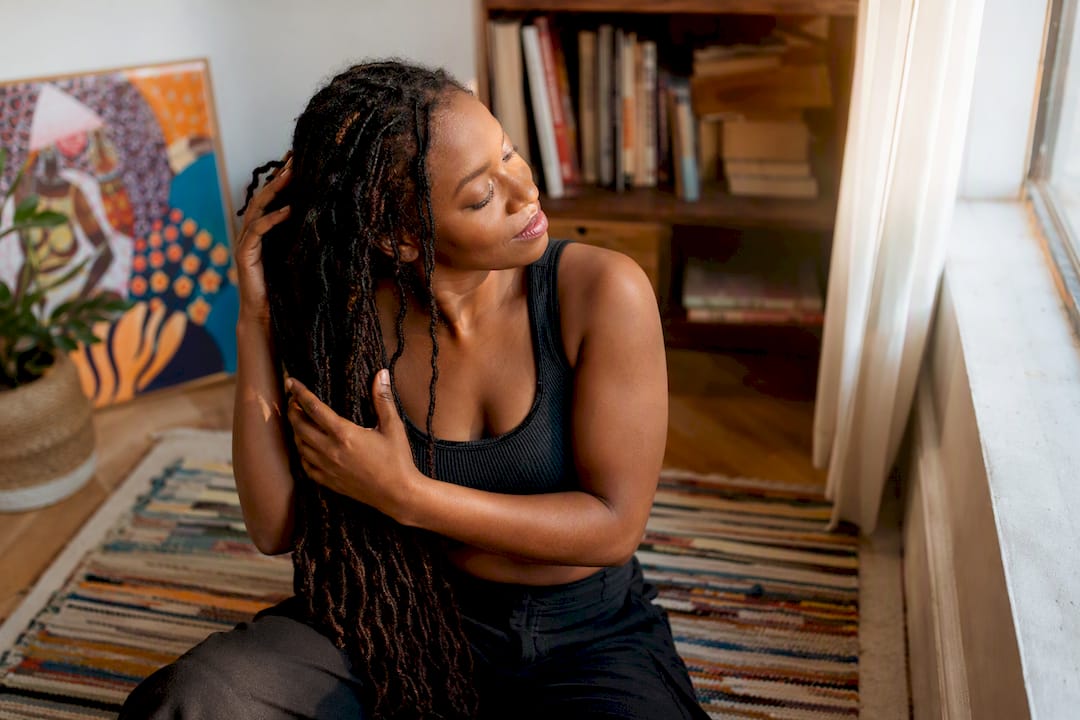
Experiment freely with color, length, and silhouette. Just don't let a trend talk you into a tension habit your edges will pay for later. For anything permanent, a color change, or a first-time install, sit down with a licensed loctician who can read your specific texture and scalp before you commit.
Ready to See These Loc Styles on Yourself?
Scrolling through inspiration photos only gets you so far when none of them are your face, your texture, or your hairline. Stylemycrown closes that gap: instead of guessing how a tapered bob or a set of goddess locs will actually sit on your features, you upload one photo and see it rendered on you, in minutes, at no cost for your first ten tries.
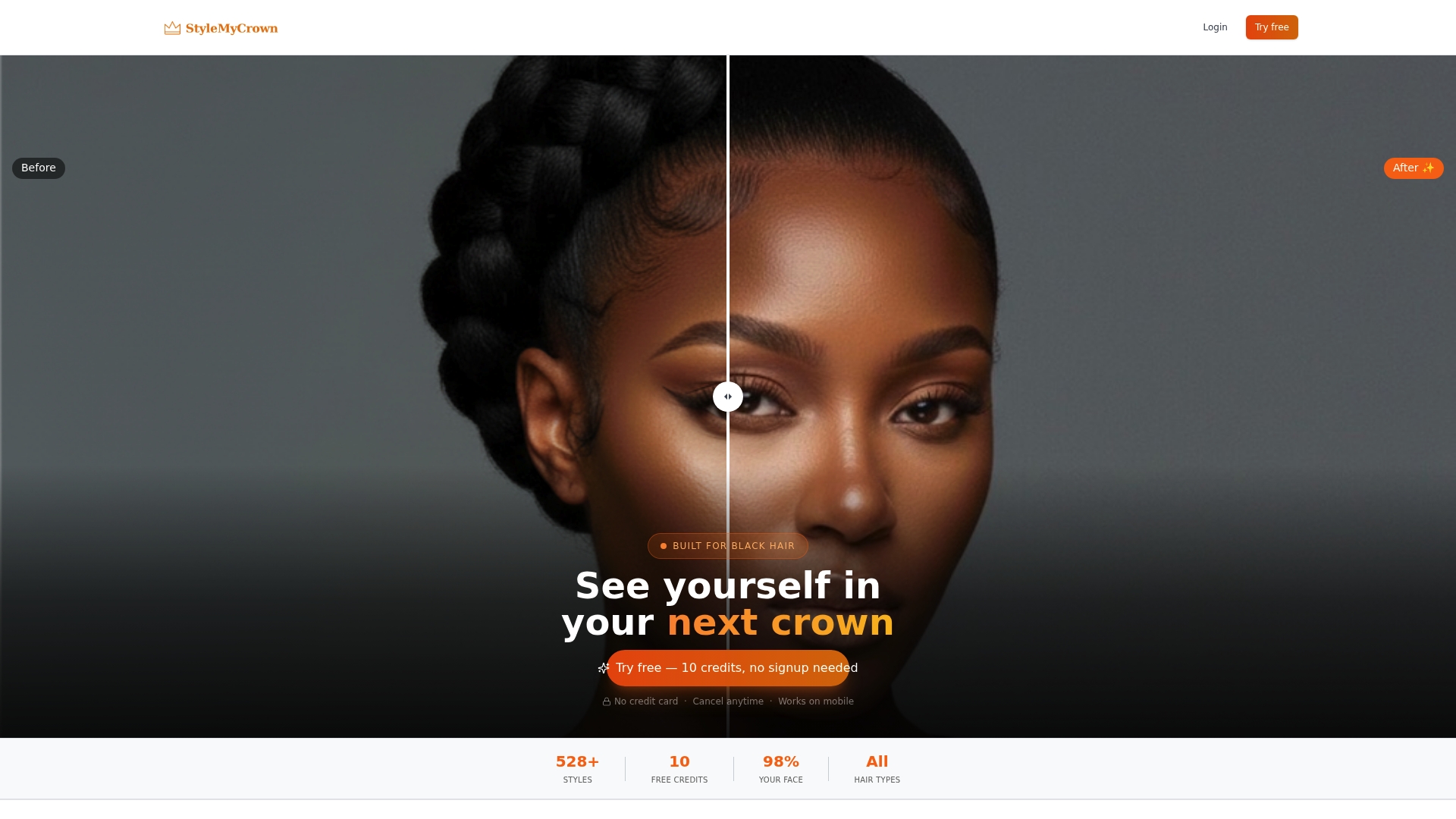
That matters most for the decisions with real stakes, a big color change, a jump from starter locs to something jumbo or micro, a mohawk you're only half-sure about. Stylemycrown's catalog of 528+ styles is built around Black hair textures specifically, not generic hair templates stretched to fit. If you already work with a loctician, the stylist catalog gives you a shared reference point to bring into your next appointment instead of a screenshot folder of other people's hair. Claim your ten complimentary credits at Stylemycrown and try your shortlist tonight.
Frequently Asked Questions
What's the difference between "locs" and "dreadlocks"? They describe the same matting process, but "locs" is the term most people prefer today, since "dreadlocks" carries older, negative historical connotations that many wearers choose to leave behind.
How long does it take for starter locs to mature? Timelines vary by texture and method, but many locticians describe roughly the first six months as the "baby loc" phase, with real maturation often taking a year or longer.
Are faux locs bad for your natural hair? Not when installed and removed properly. Faux and goddess locs isolate your natural hair from manipulation and color, which is exactly why stylists recommend them for testing a look before committing to permanent locs.
How tight should locs feel when they're first installed? Snug, not painful. Any lingering tenderness at the scalp days after installation is a sign the tension was too high and should be flagged to your stylist.
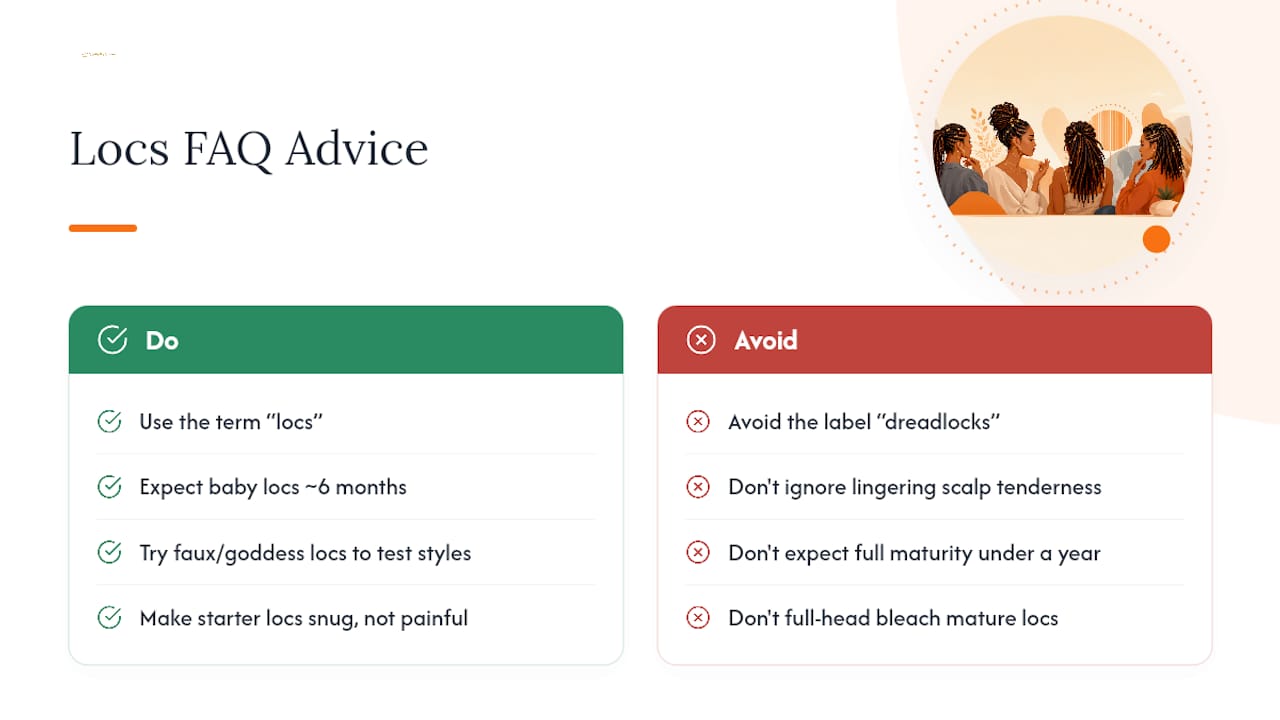
Can I color my mature locs without damaging them? You can, but full-head bleaching carries more risk than targeted color accents or extensions. Many stylists suggest warm-tone highlights on select strands rather than an all-over dye job.