
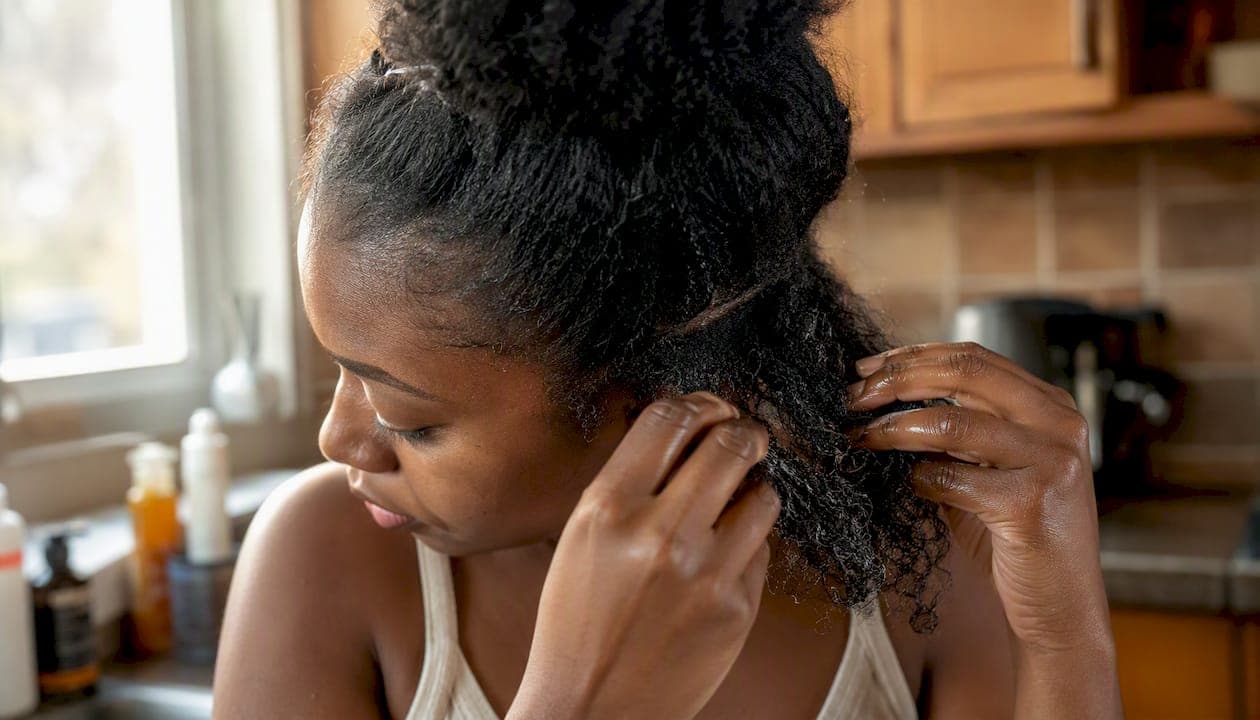
Start here: protect the line of demarcation, switch to low-manipulation styles, and begin a weekly deep-conditioning routine. Those three moves, done consistently, are what separate a smooth natural hair transition from a frustrating cycle of breakage and setbacks. Everything else builds on them.
Your first-week checklist:
- Identify your line of demarcation (where relaxed ends meet new growth) and treat that zone as fragile
- Choose one protective style you can wear for the next two weeks — twists, a bun, or braids
- Schedule your first deep-conditioning session for this weekend
- Buy a wide-tooth comb and a satin bonnet if you don't already own them
- Skip the flat iron. Completely.
That last point matters more than most people expect. Heat-blending—using a flat iron or blow dryer to force your two textures to match—is the fastest way to cause permanent curl-pattern damage. Stylists are consistent on this: the demarcation zone cannot handle direct heat without risk. Wet sets and protective styles are your tools right now, not heat.
Pro Tip: If you're not sure where your line of demarcation is, wet your hair and run your fingers from root to tip. The point where the texture shifts from coily to straight is the zone to protect most.
Key Takeaways
Protecting the line of demarcation with moisture, low manipulation, and consistent deep conditioning is the foundation of every successful natural hair transition.
| Point | Details |
|---|---|
| Protect the demarcation line | Detangle ends-to-roots with slip; never flat-iron at the junction of relaxed and new growth. |
| Deep-condition weekly | Use a bond-building conditioner like Olaplex No.5 or Redken Acidic Bonding Curls every wash day for the first six months. |
| Choose stage-appropriate styles | Wet sets and protective styles blend textures at every stage; faux locs and wigs fully conceal the line at six-plus months. |
| Trim every 6–8 weeks | Regular trims prevent split ends from traveling up the shaft and reduce single-strand knots. |
| Preview before you commit | Stylemycrown's virtual try-on lets you test over 528 styles on your own photo before a big chop or salon visit. |
Table of Contents
- What are the best transitioning hairstyles by growth stage?
- How should you wash and deep-condition transitioning hair?
- How do you protect the line of demarcation from breaking?
- Should you keep trimming gradually or do the big chop?
- Are protective styles and extensions safe during the transition?
- Which heat tools and blending techniques should you avoid?
- What tools and products should you buy for transitioning hair?
- Two sample routines to try this week
- How virtual try-on helps you choose styles during the transition
- The emotional reality of transitioning and why small goals matter
- See your next style before you commit
- Sources
What are the best transitioning hairstyles by growth stage?
The right style depends on how much new growth you're working with. DevaCurl's stage-based guidance maps it clearly: expect some noticeable new growth by about three months, more growth around six months, and clearer curl definition emerging by later months. Your style options expand at each stage.
| Stage | New Growth | Best Styles | What They Hide/Blend |
|---|---|---|---|
| Short (0–3 months) | 1–2 inches | Twists, Bantu knots, finger coils | Minimal demarcation; keeps ends tucked |
| Mid-length (3–6 months) | 2–3 inches | Braid-outs, flexi-rod sets, perm-rod sets | Blends curl sizes; relaxed ends curl up |
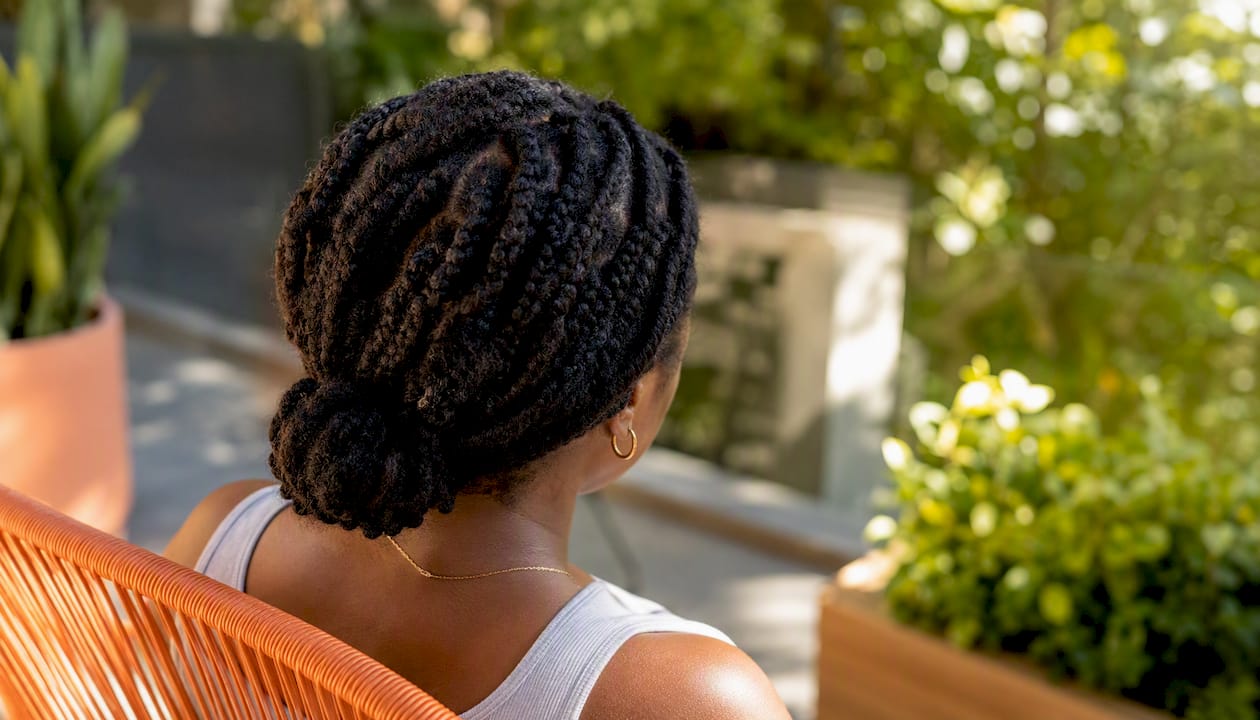
| Longer (6–12 months) | 3+ inches | Flat twists, low buns, feed-in braids, faux locs, wigs | Fully conceals the line; length retention |
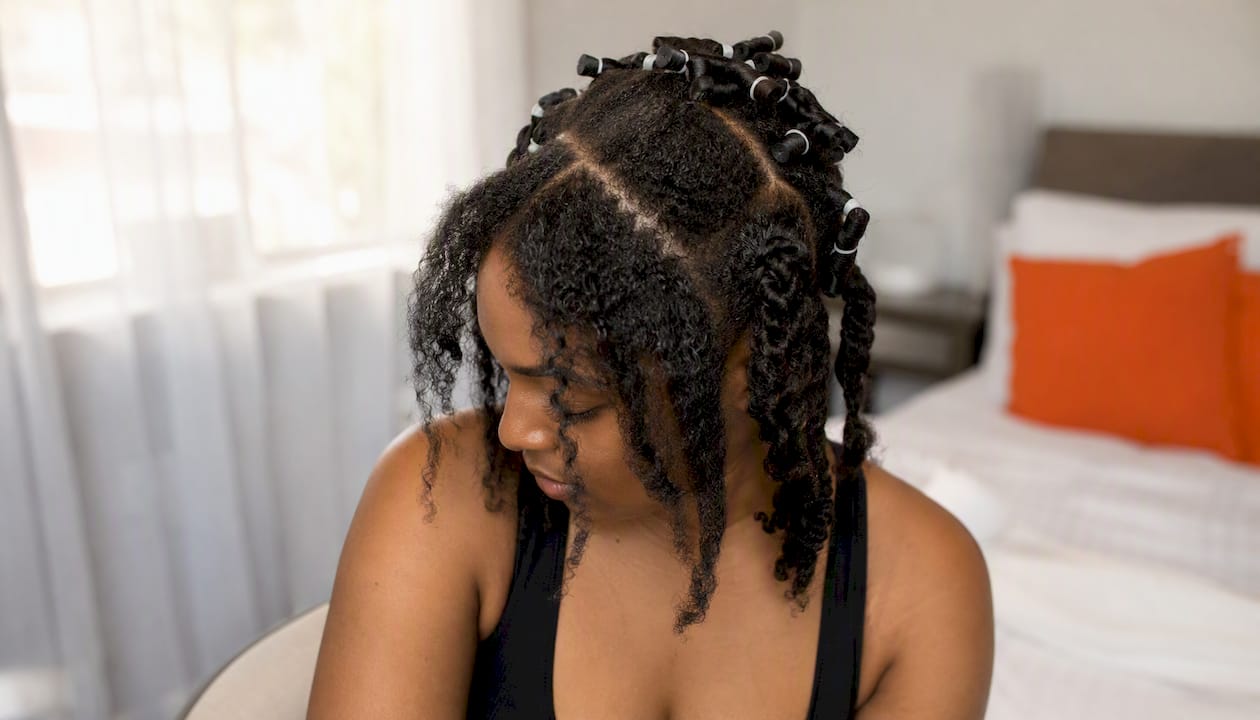
Wet sets are the most practical blending tool at every stage. Flexi rods, perm rods, and roller sets let you define curl size without heat, and they work on both textures simultaneously. The relaxed ends curl up around the rod; the new growth defines naturally. The result reads as one cohesive texture.
Feed-in braids and faux locs are particularly effective at the mid-to-long stage because they tuck the demarcation line completely. Wigs give you full creative freedom while your hair rests underneath. The one safety rule that applies to all of them: avoid tight tension at the hairline and edges.
Pro Tip: For a twist-out that blends both textures, apply your styling cream on soaking-wet hair and twist in sections no wider than your finger. Let it air-dry completely before unraveling — rushing this step is why twist-outs look frizzy at the roots.
Pro Tip: On flexi-rod sets, wrap the relaxed ends around the rod first, then continue upward through the new growth. This gives the ends the most curl definition and closes the visual gap between textures.
How should you wash and deep-condition transitioning hair?
The single most important wash-day rule: moisture first, manipulation second. Detangling dry, product-free transitioning hair is how breakage happens. Every step in the routine below is designed to keep slip in the hair before any comb or brush touches it.
Expert guidance consistently points to weekly deep conditioning, gentle detangling, and steam or hooded-dryer heat as the core of a successful grow-out routine. Here's how to execute it:
- Pre-poo (15–30 minutes before washing): Apply a lightweight oil or conditioner to dry hair in sections. This reduces friction during shampooing and protects the demarcation zone.
- Shampoo in sections: Use a sulfate-free shampoo. Divide hair into four sections, shampoo each one without piling hair on top of your head — that causes tangling.
- Deep condition with heat (30–45 minutes): Apply a rich deep conditioner and sit under a hooded dryer or use a steam cap. Heat opens the cuticle and allows the conditioner to penetrate.
- Rinse and apply leave-in: Rinse with cool water to close the cuticle, then apply a leave-in conditioner while hair is still dripping wet.
- Detangle with a wide-tooth comb: Work from ends to roots, in sections, with conditioner still in the hair.
- Seal with oil or butter: Lock in the moisture before styling.
Product callouts for the deep-condition step:
- Olaplex No.5 Hydrating Curl Conditioner targets bond repair — the chemical relaxer process breaks disulfide bonds in the hair shaft, and bond-building conditioners help restore structural integrity. Use it as your deep conditioner or follow it with a heavier mask.
- Redken Acidic Bonding Curls Conditioner works at the cuticle level to smooth and hydrate, which is especially useful when the relaxed ends feel rough or porous. Its acidic pH helps close the cuticle after washing.
Frequency: weekly for the first six months, then biweekly once your new growth is long enough to manage more easily. At the nine-month mark, you may find your hair needs a heavier protein treatment every four to six weeks alongside your moisture routine.
How do you protect the line of demarcation from breaking?
The line of demarcation is the single weakest point on your hair. It's where two completely different textures meet — the coily new growth and the chemically straightened ends — and that junction has less elasticity than either section alone. Treat it gently. Prioritize moisture and low manipulation above everything else.
Daily and wash-day handling rules:
- Always detangle from ends upward, never root to tip
- Use a wide-tooth comb or your fingers; a Denman brush works on well-conditioned hair but never on dry hair
- Section hair into four to six parts before detangling — working in smaller sections reduces the force needed
- Finger-detangle first to remove large knots before a comb touches the hair
- Never brush wet hair without a generous amount of slip (conditioner or detangling spray)
- Avoid pulling hair into tight ponytails or buns that stress the demarcation zone
What not to do:
- No flat-ironing at or near the line of demarcation
- No blow-drying on high heat
- No additional chemical services (color, texturizers) during the transition — Glamour's reporting notes that extra processing significantly increases breakage risk and management complexity
Trimming schedule: Trim regularly to remove split ends before they travel up the shaft. You don't need to remove length — a quarter inch is enough to keep the ends clean. NapturallyCurly's guide recommends regular trims as a non-negotiable part of long-term transitioning.
Pro Tip: Single-strand knots form when a coily strand loops back on itself. To reduce them, keep hair in stretched styles (twists, braids, buns) rather than loose wash-and-go styles during the early months.
Should you keep trimming gradually or do the big chop?
This is the question every person transitioning to natural curls faces. The honest answer: it depends on your breakage level, your patience, and how much the two-texture management is affecting your daily life.
Decision checklist:
- Keep transitioning gradually if: length retention matters to you, your hair is retaining moisture well, breakage is minimal, and you can manage two textures without significant daily frustration
- Consider the big chop if: breakage is persistent and worsening, single-strand knots are forming faster than you can trim them, scalp health is suffering, or the mental load of managing two textures has become unsustainable
Timeline reality check:
- 3 months: The line is subtle. Most styles can hide it. This is the easiest phase.
- 6 months: The line becomes more visible. Protective styles and wet sets are doing most of the work.
- 9–12 months: The gap between textures is significant. This is when many people either commit to the big chop or lean fully into protective styles and wigs.
Avoid adding color or chemical services during any of these phases. The added processing compounds fragility at the demarcation zone.
Pro Tip: Before you chop, try the look virtually. Stylemycrown's virtual try-on lets you preview short natural styles on your own photo before you commit — that preview alone can reduce the anxiety that leads to regret.
Are protective styles and extensions safe during the transition?
Yes — with conditions. Protective styles reduce daily manipulation, which is exactly what transitioning hair needs. But installation matters as much as the style itself.
Pros and cons by style type:
- Flat twists: Low tension, easy to moisturize underneath, great for short-to-mid stages. Re-twist every one to two weeks.
- Box braids: Excellent length retention and full demarcation coverage. Risk: too-tight installation causes traction at the edges. Keep them in no longer than six to eight weeks.
- Feed-in braids: Lower tension than traditional box braids because the hair is added gradually. Still require edge care and scalp moisturizing every three to four days.
- Faux locs: Heavy styles that look polished for weeks. The weight can stress the demarcation zone if the locs are too long or too thick. Choose medium-length, medium-thickness installations.
- Wigs: The most flexible option. Zero tension on your natural hair when installed correctly. Wear a satin-lined wig cap underneath.
- Sew-ins: Effective for length retention but require careful leave-out management at the demarcation zone. Give hair a two-week break between installs.
Maintenance while protected:
- Moisturize your scalp every three to four days with a lightweight oil or spray
- Sleep in a satin bonnet every night, even over braids
- Never leave any extension style in longer than eight weeks
Glamour's reporting on protective styling cautions specifically against tight installations and long-term extension wear without breaks, citing tension and edge damage as the primary risks.
Pro Tip: Use the time your hair is in a protective style to practice your care routine on your scalp and edges. Consistent scalp care during a protective period builds the habit you'll need when your hair is fully out.
Which heat tools and blending techniques should you avoid?
Avoid heat-blending. Full stop. Stylists warn that applying direct heat at or near the line of demarcation can permanently alter your curl pattern — not temporarily straighten it, but change it for good. That's a risk no style result is worth.
What to avoid entirely:
- Flat-ironing to blend relaxed ends with new growth
- Blow-drying on high heat, especially without a heat protectant
- Repeated silk presses during the transition (occasional use with a protectant is lower risk, but frequent use compounds damage)
- Any additional chemical processing while transitioning
Safer alternatives that actually work:
- Wet sets — flexi rods, perm rods, and roller sets applied to damp, conditioned hair
- Bantu knots set on wet hair and unraveled after drying
- Braid-outs and twist-outs on stretched, conditioned hair
- Silk presses used sparingly (once every few months, with a quality heat protectant, on low-to-medium heat settings)
On the Dyson Corale and T3 Lucea Smart Flat Iron: Both are premium tools with temperature control features that reduce heat damage risk compared to basic flat irons. The Dyson Corale uses flexing plates that apply less mechanical stress; the T3 Lucea Smart Flat Iron has a smart heat sensor that maintains consistent temperature. If you use either during the transition, keep the temperature at or below 350°F, apply heat protectant to every section, and limit use to once every three to four weeks. Neither tool eliminates the risk of heat damage at the demarcation line — they reduce it.
What tools and products should you buy for transitioning hair?
Keep this list simple and purposeful. Every item below solves a specific problem that transitioning hair faces.
Essential tools:
- Wide-tooth comb (detangling with slip)
- Detangling brush (use only on conditioned, wet hair)
- Satin bonnet or satin pillowcase (friction reduction overnight)
- Hooded dryer or steam cap (deep-conditioning penetration)
- Heat protectant spray (required if you use any heat tool)
Essential products:
- Sulfate-free shampoo (gentle cleansing without stripping moisture)
- Deep conditioner (weekly; look for humectants like glycerin and aloe vera)
- Olaplex No.5 Hydrating Curl Conditioner (bond-building; use weekly or as a treatment)
- Redken Acidic Bonding Curls Conditioner (cuticle-smoothing; ideal for porous, rough-feeling ends)
- Leave-in conditioner (applied after every wash)
- Sealing oil (jojoba, castor, or avocado oil to lock in moisture)
- Bond-building treatment (use every four to six weeks for structural repair)
What to look for on labels: humectants (glycerin, aloe, panthenol), bond-building actives (bis-aminopropyl diglycol dimaleate, hydrolyzed keratin), and the absence of sulfates in any shampoo you use more than once a week.
| Product Category | Purpose | How Often | Best Stage |
|---|---|---|---|
| Deep conditioner | Moisture and softness | Weekly | All stages |
| Bond-building conditioner | Structural repair at demarcation | Weekly to biweekly | 3–12 months |
| Sealing oil | Lock in moisture post-wash | Every wash day | All stages |
| Protein treatment | Strengthen weakened strands | Every 4–6 weeks | 6+ months |
| Heat protectant | Reduce heat damage risk | Every heat session | All stages |
On premium heat tools: The Dyson Corale and T3 Lucea Smart Flat Iron are available at major U.S. retailers. Both are worth considering if you plan to use heat occasionally, but neither replaces the core moisture-and-protection routine.
Two sample routines to try this week
Wash-day routine (plan for 2–3 hours)
- Pre-poo (30 minutes): Apply oil or conditioner to dry, sectioned hair. Cover with a plastic cap.
- Shampoo (15 minutes): Wash in four sections with a sulfate-free shampoo. Rinse thoroughly.
- Deep condition (30–45 minutes): Apply Olaplex No.5 or Redken Acidic Bonding Curls Conditioner. Sit under a hooded dryer or steam cap.
- Rinse and apply leave-in (10 minutes): Cool-water rinse, then apply leave-in to soaking-wet hair.
- Detangle (15–20 minutes): Wide-tooth comb, ends to roots, section by section.
- Style (20–30 minutes): Set on flexi rods, twist out, or braid for a protective style.
Troubleshooting: If hair tangles badly during step five, add more leave-in conditioner and finger-detangle first. If hair feels dry after drying, your sealant step needs a heavier oil.
Nightly routine (10 minutes)
- Refresh moisture: Spritz hair lightly with water or a leave-in spray.
- Seal: Apply a small amount of oil to ends and the demarcation zone.
- Protect edges: Apply a light edge cream if edges feel dry.
- Wrap or pineapple: Loosely pineapple (gather hair at the crown with a satin scrunchie) or wrap in a satin scarf.
- Bonnet: Pull a satin bonnet over everything.
Stage adjustments: At the short stage (0–3 months), the nightly routine takes five minutes. At six-plus months with more length, add a loose two-strand twist before the bonnet to reduce tangling overnight. When breakage spikes, swap your regular deep conditioner for a bond-building mask on the next wash day.
How virtual try-on helps you choose styles during the transition
Previewing a style before you cut or install it removes one of the biggest sources of anxiety in the transition process. That's not a small thing. When you're managing two textures and considering a big chop or an expensive faux-loc install, seeing the result on your own face first changes the decision from a guess to an informed choice.
Stylemycrown's virtual try-on is built specifically for this. The platform's catalog includes over 528 curated hairstyles designed for diverse Black hair textures, from tight coils to loose waves, with texture-aware previews that reflect how a style actually sits on your hair type — not a generic mannequin head.
How to use it during your transition:
- Upload a clear, front-facing photo
- Browse the catalog filtered by texture and length
- Try protective styles, big-chop looks, and mid-length options side by side
- Screenshot your favorites and bring them to your stylist appointment
The complimentary credits let you try multiple looks before spending a dollar. That's a real advantage when you're deciding between a six-week faux-loc install and a big chop — two choices with very different outcomes and very different price tags.
Pro Tip: Use your Stylemycrown virtual try-on results as a reference image when you talk to your stylist. Showing a stylist exactly what you want — on your own face — shortens the consultation and reduces the chance of a miscommunication.
The emotional reality of transitioning and why small goals matter
We want to say this plainly: the physical part of transitioning is manageable. The emotional part is harder than most people expect.
There's a specific kind of frustration that shows up around month four or five, when the line of demarcation is visible, the styles that worked at month two no longer cooperate, and the finish line still feels far away. NPR's reporting on natural hair transitions is direct about this: setting realistic expectations and treating the process as incremental rather than all-or-nothing is what keeps people from abandoning it prematurely.
Small wins are real wins. Your first successful twist-out that actually blends both textures? That's progress. A wash day where you detangled with zero breakage? That's a skill you built. Celebrate those moments specifically, not vaguely.
Our suggestion: set one measurable goal per month. Month one — consistent weekly deep conditioning. Month two — master one wet-set style. Month three — schedule a trim and keep it. These micro-goals compound. And when you're anxious about a big chop or a new style, try it virtually on Stylemycrown first. Seeing yourself in the look before you commit is a genuine anxiety reducer, not just a convenience.
See your next style before you commit
Transitioning is full of decisions that feel permanent: the big chop, the faux-loc install, the first time you wear your natural texture out. Stylemycrown exists to make those decisions feel less final.
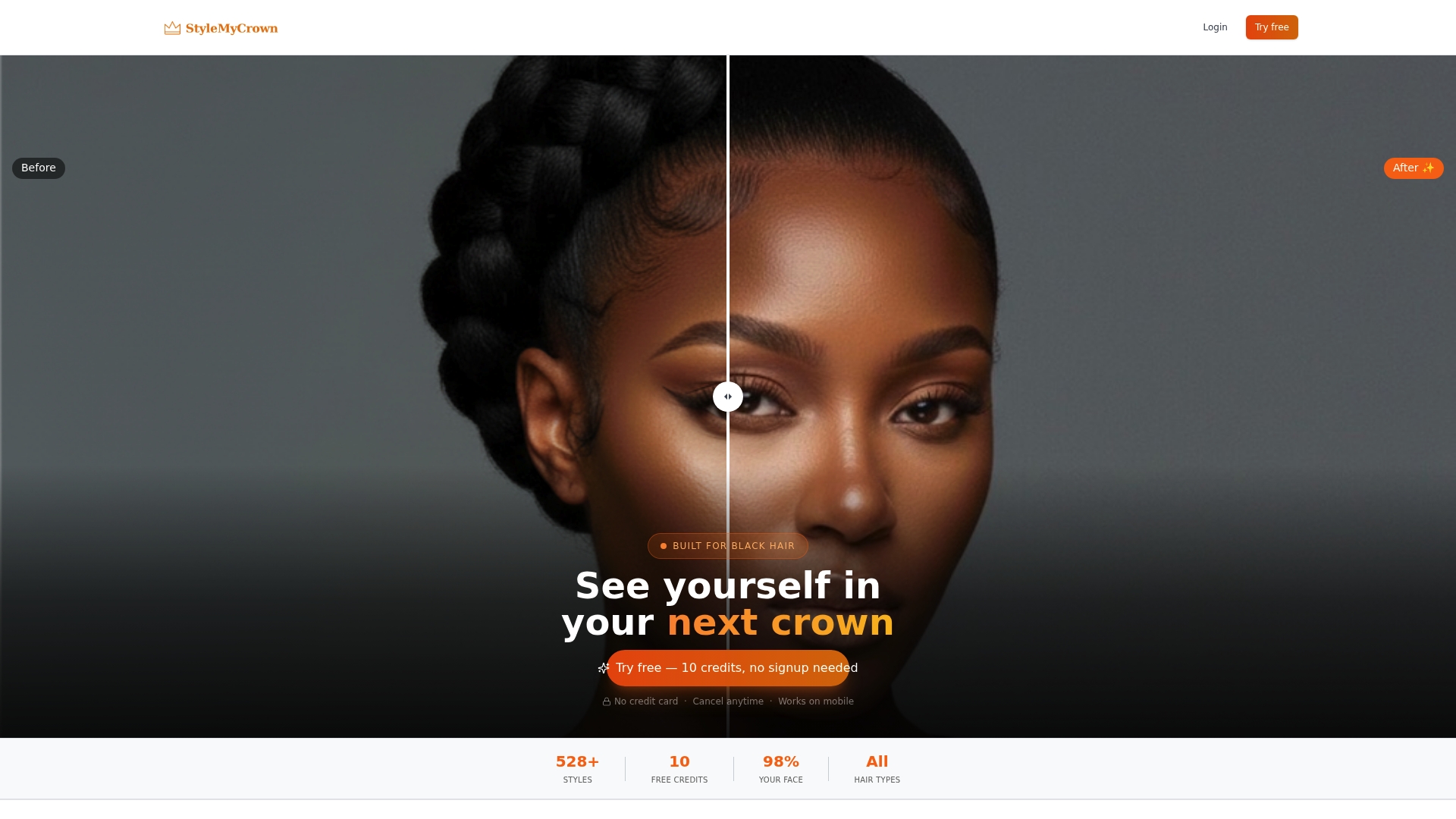
With over 528 curated hairstyles built for Black hair textures, Stylemycrown's virtual try-on lets you preview protective styles, big-chop looks, and everything in between on your own photo before you spend money at a salon or commit to six weeks in braids. The platform starts free: sign up, use your complimentary credits, and browse the style catalog to find looks that fit your current transition stage. If you want professional guidance after your preview, the stylist directory connects you with professionals who can bring the look to life. Start your first virtual try-on at Stylemycrown today.
Sources
- 4 Expert Tips To Help You Grow Out Your Relaxer
- Transitioning hair stages and routines (DevaCurl)
- Transitioning to natural hair doesn't have to be complicated — 5 steps to make it easier (NPR)
- Transitioning hairstyles for beginners (ipsy)
- Best transitioning hairstyles for Black hair (Byrdie)