
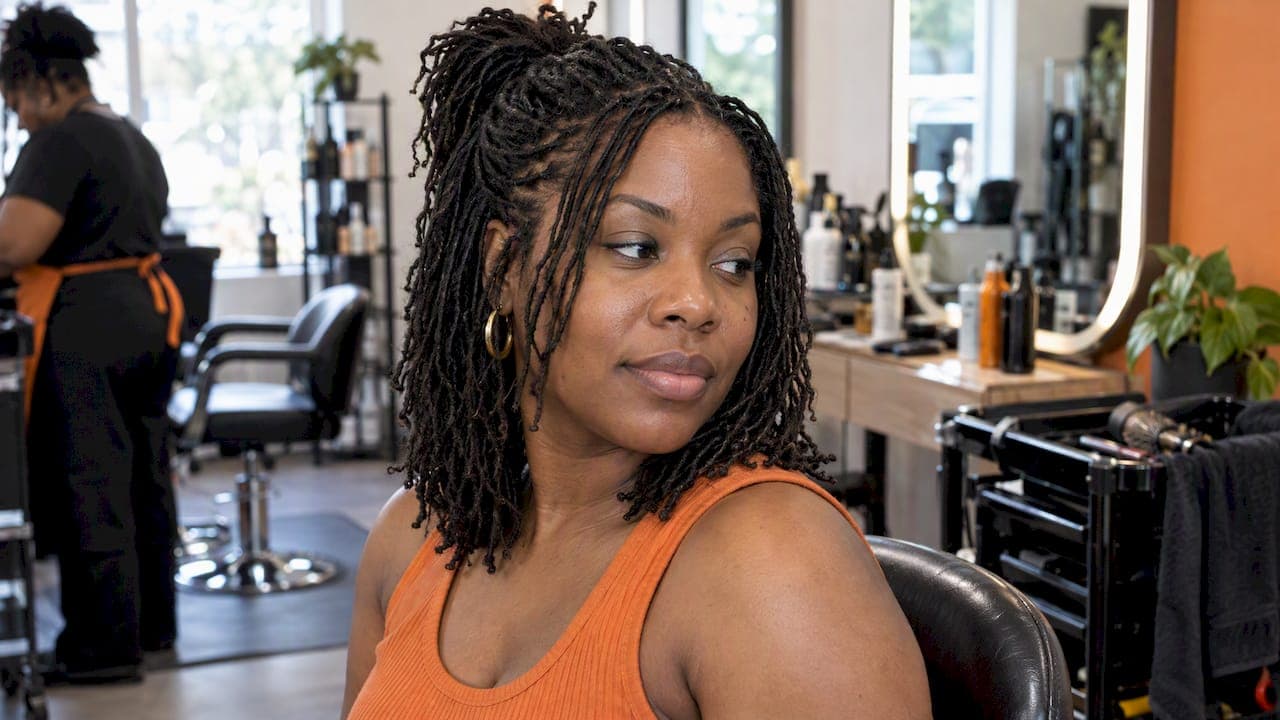
The best micro loc styles right now fall into five directions: a short bob with curled ends, messy starter locs, a high ponytail or sculpted updo, two-tone or colored locs, and faux micro crochet looks for anyone not ready to commit. Fine to medium textures take well to short, curled finishes, while longer, denser locs carry updos and color with more drama. Below, we break down the exact styles, how to finish them, and how to keep them healthy.
TL;DR:
- Fine hair often benefits from smaller locs set closer together, while dense hair may need wider spacing or combined sections to limit weight.
- For curled ends, roll the final two to three inches of slightly damp locs, then wait until they dry fully before removing rods.
- Retwists usually occur every four to six weeks, while retying between visits can reduce tension; ask a loctician to set a schedule for your density.
- Color services suit locs that have matured for at least six months; deep condition the following week because processing dries strands.
- Faux crochet locs offer a temporary trial, but they should come out within six to eight weeks to prevent tension.
Table of Contents
- Curated micro loc styles by length and finish
- Styling techniques and tools for micro loc finishes
- Maintenance and scalp care for healthy micro locs
- Choosing micro loc styles for your hair and lifestyle
- Try before you commit: previewing micro loc looks
- Why microlocs still feel like a personal statement
- FAQ
- Sources
Curated micro loc styles by length and finish
Microlocs sit in their own lane. They are small, usually between 3 and 10 millimeters in diameter, which gives them the flexibility of twists with the permanence of locs. That size range is also what makes the style list below so long. Here are the looks worth saving, organized from short to long, plus one finishing tip for each.
- Classic micro loc bob: A blunt, chin-length cut that reads polished and low-maintenance. Best for fine to medium hair that holds a clean line. Finish with a light loc gel on the ends only to avoid flattening the roots.
- Bob with curled ends: The same blunt shape, but the last two inches are set on perm rods or flexi rods for soft curls. Works on any texture from 3B to 4C, since the curl is added rather than relying on natural pattern. Leave rods in overnight for a tighter, longer-lasting curl.
- Loc knot bob: Shoulder-length locs looped into small knots at the ends instead of curled. Flatters thicker locs that hold a knot shape well. Secure each knot with a tiny elastic band hidden inside the loop.
- Shoulder-length waves: Mid-length locs set in a loose S-pattern using large flexi rods. Suits medium to thick locs that need movement without bulk. Apply a water-based leave-in before rodding so the wave sets without stiffness.
- Hip-length interlocked style worn loose: Long, mature locs left down to show length and interlocking pattern. Best for locs that are several years into growth. Keep a light oil on the scalp to prevent the extra weight from pulling at the edges.
- High ponytail: All locs gathered and wrapped smooth at the crown, tails left free or curled. Works at almost any length past four inches. Wrap the base with a silk strip before adding an elastic to protect the hairline.
- Sculpted high updo: Locs twisted into a bun or pinned into a sculptural shape at the crown, inspired by practical twisted updo styles. Ideal for medium to long locs that need to be off the neck for work or events. Pin from underneath so the shine of the finished style stays visible.
- Half-up, half-down: Top section gathered and pinned, bottom locs left loose. A flattering middle ground for anyone growing locs out and wanting versatility. Use a small amount of edge control along the part line for a cleaner split.
- Bantu knots on locs: Sections wrapped into coiled knots across the head, worn as-is or unraveled for crimped texture. Best suited to medium length locs with enough give to wrap. Mist with water before wrapping so the knot holds without product buildup.
- Twisted micro locs: Two locs twisted around each other in pairs for a chunkier, textured look. A good option for anyone wanting more visual thickness without adding hair. Twist while slightly damp so the shape locks in as it dries.
- Two-tone locs: Half the head in a base color, half in a contrasting tone, often split down the middle or layered front to back. Works best on locs at least six months mature, since color holds better once the loc has fully formed. Deep condition the week after any color service.
- Ombre or colored locs: Gradual color transition from root to tip, or an overall tone change. Flatters longer locs where the gradient has room to show. Extra hydration after coloring keeps the strands from drying out.
- Starter loc variations: Freeform, comb coil, or two-strand twist starts for anyone in the first few months. Suited to every texture, since the method is chosen based on hair type. Keep starter locs in looser, lower-tension styles for the first several months.
- Faux micro locs (crochet method): Pre-made micro locs crocheted onto natural hair for a temporary full look. A strong option for anyone testing the style before committing long term. Remove within six to eight weeks to avoid tension on natural strands underneath.
That list covers the range we see requested most, but it barely scratches what's possible once locs mature. For more loc looks beyond microlocs specifically, our loc styles roundup has additional visuals worth saving.
Styling techniques and tools for micro loc finishes
Most of the looks above come down to a handful of techniques. Perm rods and flexi rods create curl at the ends without touching the root, which is why they show up in bob, ponytail, and Bantu knot finishes. Interlocking keeps the base neat between retwists. Crochet work is how faux and micro locs get installed without committing to a permanent start.
A few step starters for common finishes:
- Curled ends: Section clean, slightly damp locs, roll the last two to three inches onto a rod, and let them dry fully before removing.
- Sleek high pony: Gather locs at the crown, smooth the base with a boar bristle brush, wrap with a silk strip, then secure with a seamless elastic.
- Loc knot bob: Loop each loc into a small circle at the desired length and secure with a mini elastic hidden inside the knot.
- Messy high ponytail: Gather loosely, leave a few face-framing locs out, and finish with a light edge cream instead of gel for a softer line.
Favor light leave-in sprays and non-specific conditioners that hydrate without residue. Avoid heavy waxes, which cause buildup over time, and skip alcohol-heavy setting sprays that dry out the strand.
Pro Tip: Always let a curled or rodded finish dry completely before sleeping on it, or the curl will fall flat by morning.

Maintenance and scalp care for healthy micro locs
Retwisting uses a fresh application of product and a twisting motion at the root, while retying simply smooths loose hair back into the loc without new product. Retwists tend to happen every four to six weeks, and many locticians space retying in between for lower tension. Ask your loctician directly which schedule they recommend for your density.
- Protect nightly: Wrap locs in a silk or satin scarf before bed to prevent friction and frizz.
- Moisturize weekly: Use a light water-based spray rather than heavy oils, which can weigh down smaller locs.
- Deep condition monthly: Focus on the scalp and first few inches of growth, where product tends to miss.
- After coloring: Add an extra moisture treatment that week, since color processing pulls hydration from the strand.
- Watch for tension: Thinning at the hairline or soreness at the root means it's time for looser parts, lighter styles, or a longer gap before the next retwist.
For a deeper breakdown of tension signs and a stage-by-stage routine, our locs maintenance guide walks through it in more detail.
Choosing micro loc styles for your hair and lifestyle
The right style depends on a few honest answers about your hair and your schedule.
- Texture: Microlocs suit textures from 3B through 4C, so almost any curl pattern can carry the look.
- Density: Fine hair often does better with smaller, closer-set locs for fullness, while very dense hair may call for looser spacing or combining sections to reduce weight.
- Length and styling time: Shorter locs favor bobs and curled finishes that need less daily upkeep, while longer locs open the door to updos and ponytails.
- Upkeep tolerance: If frequent salon visits aren't realistic, ask about retying between retwists to stretch the schedule.
- Booking the appointment: Bring reference photos, ask about the expected maintenance cadence, and confirm color safety before any chemical service.
For anyone still deciding between microlocs and a finer alternative, our microlocs versus sisterlocks breakdown lays out the differences side by side.
Try before you commit: previewing micro loc looks
I'm Christelle, and most of what I know about microlocs came from trial and error, including a few cuts I regretted before I saw them finished. That's exactly why a preview step matters so much now. You can test many curated styles on your own photo with virtual try-on technology, checking part placement, face framing, and color before anything touches your hair. Start with complimentary credits, try several looks, and save the ones that work for your next consultation.

Why microlocs still feel like a personal statement
Microlocs let you change your mind without changing your commitment. A bob one season, a high pony the next, color whenever you're ready. That flexibility is rare in protective styling, and it's part of why the style has held on this long. If you're unsure which direction fits you, preview it first or talk it through with a loctician before you cut or color anything.
— Christelle
FAQ
What type of hair is best for microlocs?
Microlocs work well across textures from 3B through 4C, since the small loc size adapts to different curl patterns. Finer hair tends to hold the look with less bulk, while coarser textures often form locs faster.
What are the downsides of microlocs?
Microlocs are a long-term commitment, and removal usually means cutting or a careful comb-out rather than a quick takedown. They also require consistent retwist or retie visits to stay neat as new growth comes in.
What are the different types of micro locs?
Common variations include freeform, comb coil, and two-strand twist starts, along with faux or crochet microlocs for a temporary option. Each starting method suits a different hair type and commitment level.
Which is better, retie or retwist for microlocs?
Retwisting applies fresh product and twists the root, while retying just smooths loose hair back into place without new product. Many locticians alternate the two to reduce tension on the scalp between full retwists.
Sources
- Microlocs 101: Your Guide to Starting & Styling | PATTERN
- Microlocs: Styles, Installation, Cost, Products, and More | CurlCentric
- 40 Stunning Micro Locs Hairstyles on Black Women for 2026! – Coils and Glory