
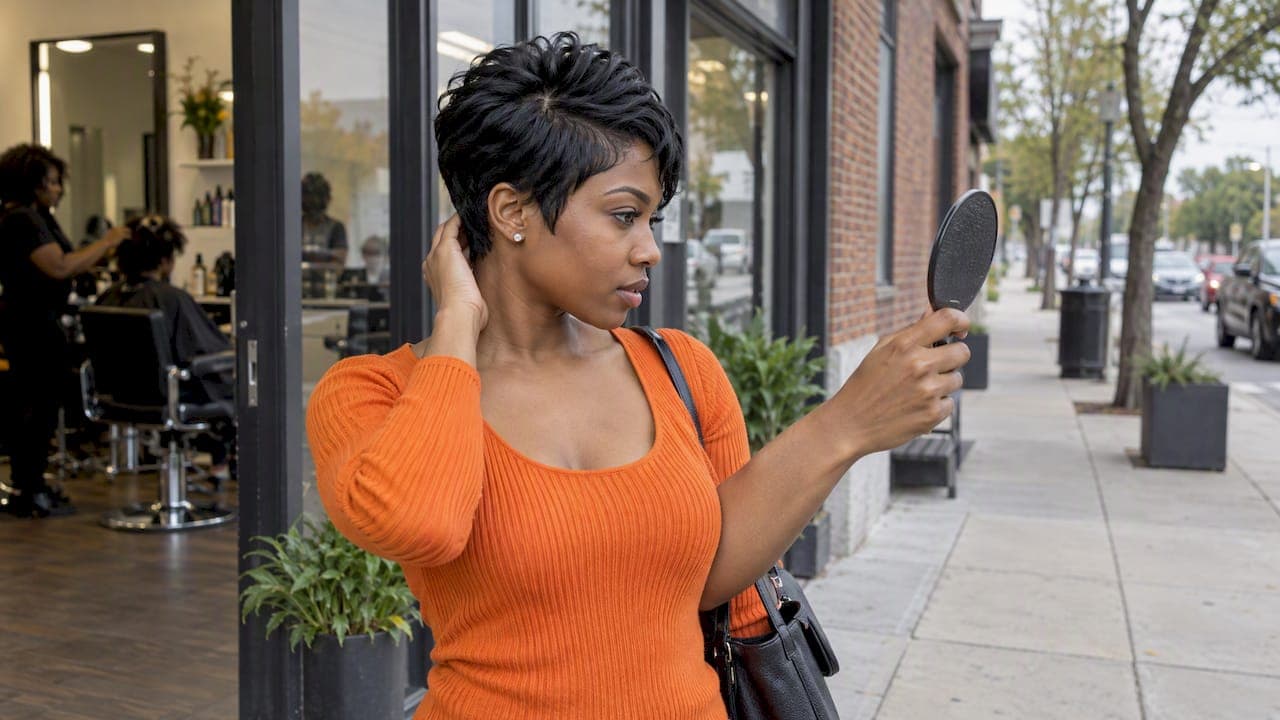
The best short weave styles right now center on pixies, textured Shixies, micro bobs, and bevelled bob shapes, and the safest way to get there is a partial quickweave or a well-fitted, glueless cap method. That approach keeps your edges out of harm's way while still giving you a clean, natural silhouette with help from mobile hair stylists for safe short weaves. Scroll down for the full style gallery, then head to the install section for the cap and maintenance details that protect your hairline.
TL;DR:
- Partial quickweaves and well-fitted, glueless caps are safer options that protect hairlines while maintaining a natural look.
- Pixie styles with short wefts suit oval and heart face shapes best, especially when blending natural hair with textured finishes.
- Shixie and shag-pixie hybrids are trending for 2026, offering movement and face-framing layers that flatter round and square faces.
- Keep glue at least half an inch from the hairline, moisturize the scalp, and monitor for early signs of lifting or tenderness to avoid damage.
- Virtual try-on tools allow previewing styles before installation, helping to select the best shape and finish for individual face features.
Table of Contents
- Our Favorite Short Weave Styles by Family
- How to Install a Short Weave Without Damaging Your Edges
- Keeping Your Short Weave Looking Fresh Day to Day
- Try Before You Cut: Seeing Your Short Weave First
- Our Honest Take on Choosing a Short Weave
- FAQ
- Sources
Our Favorite Short Weave Styles by Family
Choosing a short weave style is personal. Your face shape, your natural texture underneath, and how much daily styling you're willing to do all matter more than whatever's trending on your feed. Here's how the current short-hair families break down, with notes on who each one flatters and how to wear it.
Pixie short weaves remain the boldest short option. A 27-piece quick weave pixie uses multiple short wefts, often mixing 6 to 8 inch bundles, to build shape without adding bulk, which is a technique DIY tutorials rely on instead of one long weft. A partial quickweave pixie, where you leave a small section of natural hair out at the crown or hairline, blends the extensions into your own growth and avoids the stiff, helmet-like look that full installs sometimes carry, according to a detailed partial quick weave tutorial. Pixies suit oval and heart face shapes especially well, and they work best with a slightly textured finish rather than a flat one.
Textured pixies and Shixies (a shag-pixie hybrid) are among the defining short-hair directions for 2026, according to salon trend coverage, which points to shag-pixie hybrids and precise bob variations as the shapes clients are requesting most. The Shixie layers choppy, face-framing pieces over a pixie base, giving movement that a blunt pixie doesn't have. It's forgiving on round and square face shapes because the layers break up width.
Here's a quick rundown of the other families worth saving for your next consultation:
- Classic jaw-skimming bob: hits right at the jawline, flatters most face shapes, and looks polished with a flat-iron finish and a light serum.
- Micro and bevelled bob: a shorter, more precise bob with a rounded under-curve at the ends, a shape trend reports call out as a defining 2026 direction; best on fine to medium textures that hold a curl.
- Stacked or angled bob: shorter in back and longer in front, builds volume at the crown, and suits anyone wanting a bit of drama without going full pixie.
- Short lob variations: a longer bob that sits closer to the chin or just below, works well for readers transitioning out of longer styles gradually.
- Choppy pixie weave: heavier texturizing throughout for a lived-in, undone look, best styled with a sea-salt spray or texturizing pomade.
- Curly short weave: uses curly-textured wefts instead of straight ones, a great option if your natural texture is coily and you want the install to read as an extension of your own hair.
- Short weave with bangs: works with almost any of the above bases and instantly changes the face-framing effect, especially nice for heart-shaped faces.
- Shaved-side short weave: adds an undercut or shaved detail at the temple for an edgier finish, popular with readers who want contrast between sleek and shaved sections.
- Half-braid and quickweave hybrid: a few cornrows or box braids at the base with a quickweave layered over the top for extra scalp protection.
- Mini-mullet hybrid: short and textured on top with a slightly longer nape, one of the modern mullet variations gaining traction in 2026.
Before you commit to a cut, it's worth previewing a few of these on your own photo first, since small length and finish differences change how a short style actually reads on your face.
How to Install a Short Weave Without Damaging Your Edges
A partial quickweave, where a small section of your natural hair stays out around the hairline or crown, is generally the safer choice for short styles compared to a full quickweave or a traditional sew-in, because it reduces the amount of glue or thread tension sitting directly on your perimeter. Full quickweaves glue a cap directly to the scalp edge to edge, which concentrates stress exactly where your hairline is most fragile.
The two-cap method is the install detail that matters most. A first, thinner cap goes on to create a moisture barrier, and a second, well-fitted protective cap goes over it before any wefts are attached, a sequence edge-protection guidance recommends specifically to reduce traction and keep glue away from the hairline. Check the cap fit before any glue touches your head: it should sit snug without pulling at the temples or nape.
- Keep glue at least half an inch from your actual hairline, never directly on it.
- Moisturize and massage the scalp before install day, not just after removal.
- Avoid any style that pulls the leave-out tight against the cap edge.
| Install consideration | What to expect |
|---|---|
| Typical chair time | Shorter than a full sew-in, since fewer wefts are used |
| Maintenance check-ins | Periodic, to watch for lifting or cap slippage |
| Signs to remove early | Itching at the perimeter, visible lift, or tenderness |
Watch your edges for early warning signs rather than waiting until removal day. If you notice lifting, tenderness, or flaking at the perimeter, that's your cue to take the install down sooner rather than pushing through to a planned date.
Keeping Your Short Weave Looking Fresh Day to Day
Short styles show wear fast, so your daily routine does more work than it would on a longer install. The finish you choose from day one shapes how much upkeep you'll need.

Sleek finishes rely on a flat-iron touch-up and a lightweight serum to control frizz, a combination styling guidance points to for keeping straight, polished short cuts looking intentional rather than flat. Textured finishes go the opposite direction: a piecey pomade or a sea-salt spray scrunched through damp hair gives the tousled look that Shixies and choppy pixies depend on. Pick sleek when you want a put-together, low-movement style; pick textured when you want something that looks a little undone on purpose.
At night, a satin bonnet or pillowcase protects both the install and your edges, and a light oil massaged into the perimeter helps prevent dryness without weighing the cap down. Skip heavy gels near the hairline since they tend to trap moisture against the cap and invite lift.
- Cleanse your scalp with a focus on the perimeter if you run oily, since buildup there speeds up edge lift.
- A mini flat-iron pass mid-week refreshes sleek styles without a full restyle.
- Only spot-reapply glue near the perimeter if you're confident in the technique, or see a stylist instead.
Pro Tip: Use a razor comb instead of straight scissors when blending a pixie, since it feathers the ends and avoids the blocky, mushroom-shaped silhouette that blunt cutting can leave behind.
Try Before You Cut: Seeing Your Short Weave First
Short styles carry more risk than long ones because a few inches of length or a texture swap completely changes how the cut reads on your face. That's exactly the gap virtual try-on fills. Upload a photo, browse pixie, bob, and mullet-hybrid families side by side, and toggle between sleek and textured finishes before anything touches your real hair.

Our style catalog carries a large collection of looks curated specifically for Black hair textures, so what you preview actually resembles what you'd get in the chair. Save a few screenshots and bring them to your consultation. It's not a replacement for sitting down with a stylist, it's the step that makes that conversation sharper and takes the guesswork out of "what if" before you commit.
Our Honest Take on Choosing a Short Weave
Short hair is unforgiving in the best way. There's nowhere to hide a bad cut, which is exactly why I tell people to start cautious: a partial quickweave first, or a virtual preview before that, so you know the shape works on your actual face before you commit to it.
Find a stylist who specializes in short textures and ask directly about cap fit and low tension. For deeper technique, our guides on short pixie cuts for Black women and protective hairstyles go further than I can here.
— Christelle
FAQ
What are trendy short weave styles?
Pixies, textured Shixies, micro and bevelled bobs, and mini-mullet hybrids are the leading short-weave directions right now, according to current salon trend coverage. Each works best when matched to your face shape and whether you prefer a sleek or textured finish.
What is the 3 in rule for short hair?
This isn't a standardized technical term in short-hair styling, and definitions vary depending on who you ask. If your stylist mentions it, ask them to clarify exactly what measurement or ratio they mean for your specific cut.
What are the trends in short hair for 2026?
Shag-pixie hybrids, precise bevelled and micro bobs, and mini-mullet variations are defining short hair this year, with an emphasis on shape and texture over length, per recent trend analysis. Many of these looks lean into movement rather than a single blunt line.
What is the most popular short hair style?
Bobs and pixies remain the two most requested short-hair categories, with bevelled and micro bob variations seeing particular attention in 2026, according to salon trend data. The right pick still depends on your texture and face shape more than any single trend.
How can I preview a short weave before committing?
You can upload a photo and browse short-weave families through our virtual try-on platform, which previews styles on your own features before you cut or install anything. Our trial plans start with complimentary credits so you can compare a few looks before choosing.
Sources
- Short Haircut Trends 2026: Styles to Know | MjjM Salons
- How Quick Weaves Damage Your Edges (And How to Protect Them) – Edge Naturale
- 30-Minute Quick Weave Tutorial (Partial Quick Weave + Leave Out) Using Bobbi Boss Core Bundles
- Glosswardrobe