
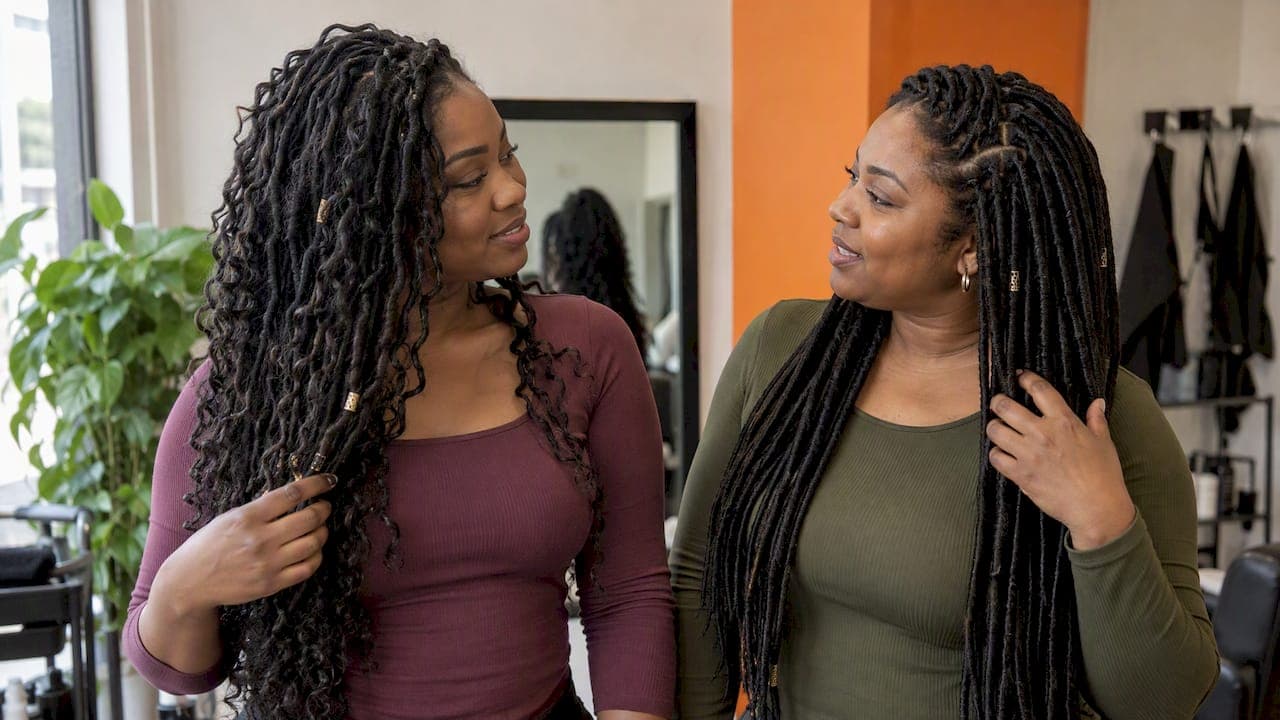
Soft locs and faux locs are close cousins, and that is exactly why the choice feels confusing. Soft locs are a lighter, more flexible, more textured version of faux locs, usually made with premade crochet locs. Classic faux locs are smoother, neater and a bit stiffer, and they often take longer to install. Butterfly locs sit in the same family, with loops and bubbles along each loc.
I have sat in the chair for both. I know the feeling of scrolling for an hour, saving ten photos, and still not knowing which one will look right on my own head. Let's sort it out.
TL;DR
- Soft locs are lighter, bendier and more textured. They are usually crocheted in as premade locs, so they tend to install faster.
- Classic faux locs are smoother and more uniform. They can be heavier and may need a few days to settle and loosen.
- Butterfly locs are a distressed variant with loops along the shaft. Plan on about three to six hours in the chair.
- All three are protective only when they are installed without tension and taken down on time.
- Preview the look on your own photo before you book, so the surprise happens on a screen and not in the mirror.
Table of Contents
- What is the real difference between soft locs and faux locs?
- How the installs work
- Soft locs vs faux locs: weight, feel and movement
- Pros and cons of faux locs
- Pros and cons of soft locs
- Pros and cons of butterfly locs
- Will any of these damage your hair?
- How long they last and how to take them down
- Which one should you choose?
- Our perspective: preview the look, then book the chair
- Try soft, faux and butterfly locs on your own photo
- FAQ
- Sources
What is the real difference between soft locs and faux locs?
Here is the honest answer: soft locs are a type of faux loc. What sets them apart is that they prioritize movement, flexibility and a soft texture from the day they go in.
Byrdie describes soft locs as premade crochet locs that are lighter, usually made with curlier, slightly shiny hair, and more flexible. Their irregular pattern gives a realistic, relaxed shape. Faux locs tend to be more uniform and a little neater.
There is also a structural difference. According to Jorie Hair, soft locs generally use a crochet soft loc as the main hair and wrap mainly the natural-hair base. Faux locs use a chosen main hair and wrap from the base along the full length to the tip.
Think of it like this. Faux locs are built to imitate a finished, polished set of locs. Soft locs are built to look lived in from the first day.
Side by side
| Soft locs | Classic faux locs | Butterfly locs | |
|---|---|---|---|
| Look | Soft, irregular, slightly curly texture | Smooth, uniform, neat | Distressed, with loops or "bubbles" along the shaft |
| Feel | Lightest of the three | Can feel heavy and stiff at first | Lightweight when installed with small pieces |
| Common hair | Water wave, kinky or premade crochet locs | Marley hair, Kanekalon, premade crochet locs | Water wave braiding hair |
| Typical install | Crocheted premade locs into cornrows, or braid-in with curly hair | Braid and wrap, or crochet premade locs | Freehand wrapping, about three to six hours |
| Settling period | Usually none | May take a few days to loosen | Frizz shows up around four to six weeks |
How the installs work
The method matters as much as the name. It changes your time in the chair, the weight on your scalp and how the style comes down.
Faux locs: braid and wrap, or crochet
Byrdie outlines two common routes. The braid-in method starts with individual box braids. Braiding hair is then crocheted and wrapped around each braid, and the process may take at least six to eight hours. The crochet method uses cornrows and a crochet needle to attach premade loc extensions, and it commonly takes about two to four hours depending on the look.

Huda Beauty's stylist interview puts the overall range at three to eight hours, depending on length and parting size.
Faux locs also tend to need a few days to settle. Byrdie quotes a stylist saying they take longer to install and may need several days to loosen, while soft locs do not typically have that settling period.
Soft locs: premade and fast
StyleSeat notes that soft locs are typically installed by crocheting premade locs into cornrows. Braid-in soft locs can also be made with curlier hair, such as passion twist hair. Water wave hair and faux soft locs are among the hair types used for soft locs, while Marley hair and faux crochet locs are more common for classic faux locs.
If your calendar is tight, premade crochet locs are the shortest route. If you want the most natural-looking root and movement, braiding in on individual braids or twists takes longer but often rewards you.
Butterfly locs: freehand and a little messy on purpose
Butterfly locs are a distressed variant of faux locs. Huda Beauty's stylist explains they have bubbles or loops along the shaft, where regular faux locs are smooth. They use a less controlled, freehand wrapping technique with water wave hair.

InStyle explains that the stylist periodically holds pieces of hair outward while wrapping the rest around the loc. Installation takes three to six hours on average.
Soft locs vs faux locs: weight, feel and movement
This is where most people decide. Soft locs swing. They bend at the shoulder, they curl at the ends, and they do not announce themselves when you turn your head quickly. Classic faux locs sit straighter and fuller, which many people love for a sleek, finished look.
Butterfly locs get a split reputation. Their curly texture can look heavy in photos, yet celebrity stylist Molecia George says they are popular for being lightweight and low tension, especially with water wave hair rather than heavier Marley hair. A stylist quoted by Women's Health adds that small pieces matter: using small sections avoids bulk and rigidity, so the style stays light and movable.
My rule of thumb after years around this space: weight is a function of two things, the hair you choose and the size of the sections. A huge, thick loc on fine hair will pull, whatever name it carries.
Pros and cons of faux locs
What you gain
- A temporary loc look without committing your own hair to locing.
- Lots of choice in color and length.
- Relatively easy maintenance. Byrdie says they can last up to about two months.
What to watch
- They can get heavy, especially in long lengths.
- Tension at the roots and edges is a real risk.
- Left in too long, they can cause knotting or permanent locking of your natural hair.
- A skilled installer and a real maintenance plan matter a great deal.
Price varies by hair type (human or synthetic), length, the shop and extras, so ask for a full quote before you sit down.
Pros and cons of soft locs
What you gain
- A lightweight feel and natural movement from day one.
- A shorter install when you use premade crochet locs.
- No long settling stage, according to the stylist quoted by Byrdie.
What to watch
- A Reddit thread in r/blackladies shows how frustrating it can get when synthetic hair tangles with your real hair and takedown becomes hard. That is one person's experience, but it is a common worry.
- Crochet attachment on tight cornrows can strain your edges.
- The looser, curlier texture can frizz and need smoothing sooner than a neat faux loc.
If soft locs are your lane, our guide to soft locs styles that go easy on edges shows 14 looks to start from.
Pros and cons of butterfly locs
What you gain
- A boho, textured look that photographs beautifully.
- Protection from environmental breakage. Hairstylist Allyson Carter calls them an effective protective style when they fully bind and shield the strands and are maintained properly.
- A lightweight feel when installed with water wave hair.
What to watch
- Frizz. InStyle reports they can look frizzy after four to six weeks.
- Remove them if your roots start to lock or the look gets too fuzzy.
- Large, bulky loops make the style stiff and heavy, so section size matters.
Will any of these damage your hair?
Any of them can, and the cause is almost always the same: too much tension and too little care. Crochet locs set on cornrows that are braided too tight, heavy lengths that drag on the hairline, and weeks of skipped moisture are the usual story.
A few habits protect you:
- Speak up in the chair. If your scalp stings or your edges feel pulled, say so before the install is finished. A style that hurts on day one will not feel better on day twenty.
- Keep sections realistic. Smaller, lighter pieces lower the load on each root.
- Moisturize your scalp and the hair at the base. Hydrated hair is less brittle at the point where your hair meets the extension.
- Wrap it at night. A stylist in Huda Beauty's interview recommends leave-in conditioner, a peppermint-based oil for cleansing, and wrapping your hair at night.
- Respect the timeline. Take the style down before roots start to lock.
If you notice thinning, bumps, or soreness along the hairline that does not settle after takedown, see a dermatologist or a trichologist. Traction-related hair loss is easier to reverse when it is caught early. For a deeper routine, read our piece on preventing traction alopecia with stage-aware locs maintenance.
How long they last and how to take them down
Plan on roughly four to eight weeks for any of these, and treat the high end as the ceiling, not the goal. Byrdie says faux locs can last up to about two months. Butterfly locs usually start to fray from four to six weeks. Soft locs often look their best earlier and can frizz sooner than a smooth, neat faux loc.
Takedown is where patience pays. To remove butterfly locs, InStyle says to cut each loc a few inches below the end of your natural hair, then unravel it. Do not cut at the root. Take your time, use conditioner or oil for slip, and expect some shed hair. That shed hair is normal, because hair you lose daily stays trapped inside the style until it comes down.
Which one should you choose?
Ask yourself four questions:
- How much time can you sit? Premade crochet soft locs are usually the quickest route. A braid-and-wrap faux loc install can run six to eight hours.
- How do your edges feel today? If they are fragile, go lighter and ask for looser anchoring. Soft or butterfly locs with small, light pieces are kinder.
- What finish do you love? Smooth and polished points to classic faux locs. Relaxed and textured points to soft or butterfly.
- How will you wear it? For work, events, gym or a long trip, think about how each style behaves after two weeks, not two days.
If you are comparing locs against other protective styles altogether, locs vs braids walks through the maintenance side by side. Want ideas for a wider range of faux loc looks? See our guide to faux locs styles.
Our perspective: preview the look, then book the chair
We built Stylemycrown because choosing a protective style has always carried a quiet gamble. You pay, you sit for hours, and only at the end do you find out whether the length, the thickness and the texture suit your face.
With loc styles the gamble is bigger, because the differences are subtle. Soft versus classic faux versus butterfly can come down to loop size, loc thickness and how much movement you want. A photo from someone else's head cannot tell you that.
So here is how we think about it. Pick two or three candidates. Look at them on your own photo. Check how the length lands against your shoulders, how the thickness frames your face, whether the texture feels like you. Then walk into the salon with a clear picture and a clear conversation, and your stylist spends less time guessing.
Black hair has so many textures, densities and lengths that one-size inspiration rarely fits. That is why our catalog is built around Black and textured hair, and why we handle face data securely and never retain it or use it to train AI.
Style is identity. You deserve to see yours before you commit.
— Christelle
Try soft, faux and butterfly locs on your own photo
Stylemycrown is an AI virtual try-on made for Black and textured hair, with more than 528 styles to browse. You get 2 complimentary credits to start, so you can test two looks, including loc styles, before you spend anything or book an appointment.
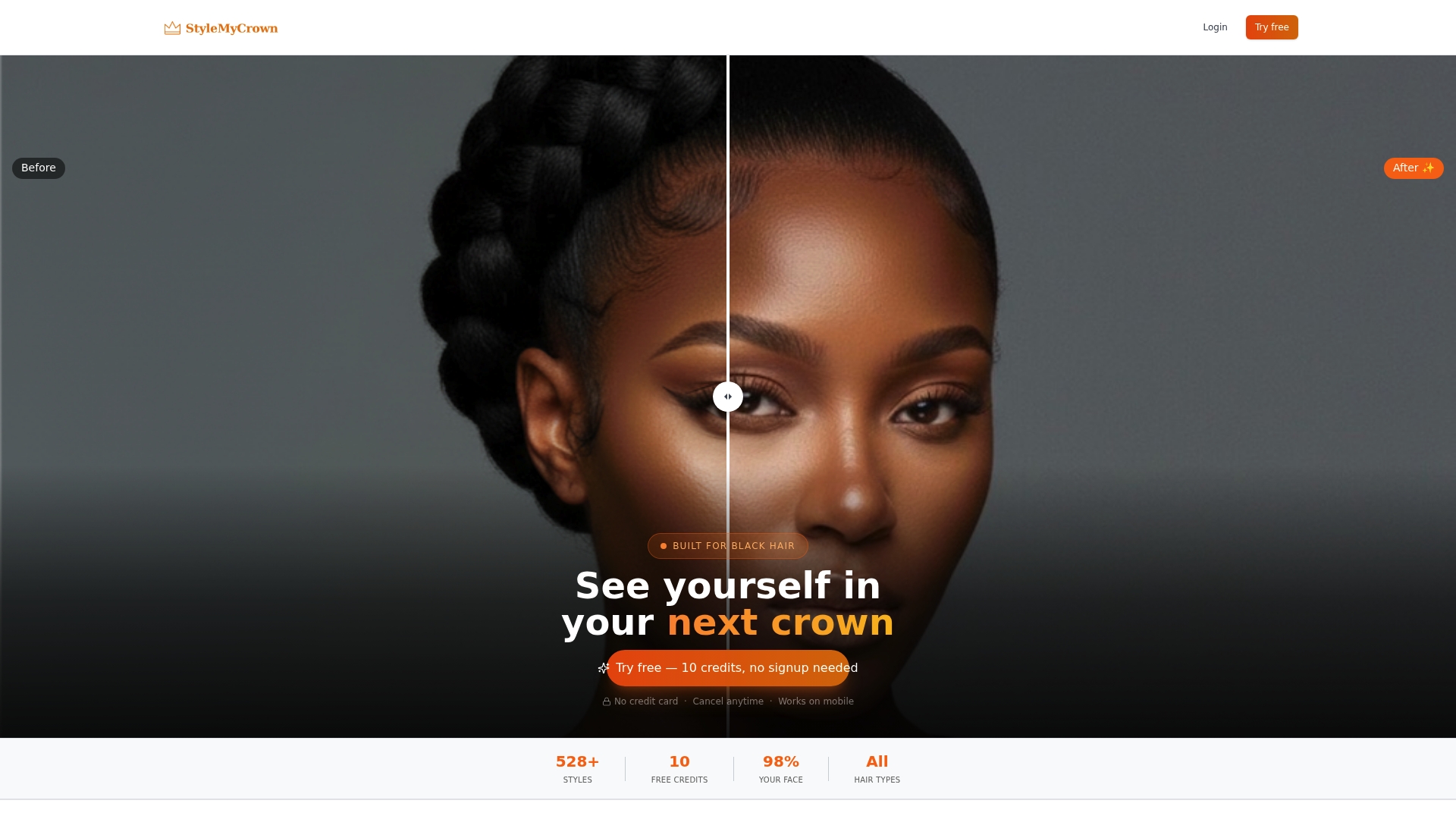
When you want to keep exploring, paid plans are listed on our pricing page: the 1 Week Trial is $17.48 per week and the 4 Week Plan is $38.73 per 4 weeks. You can start with the try-on here and screenshot your favorites to bring to your stylist.
FAQ
Are soft locs the same as faux locs?
Not exactly. Soft locs are a lighter, more flexible type of faux loc, usually made with premade crochet locs and curlier hair. Classic faux locs are generally smoother, more uniform and a bit stiffer. Which one you want depends on the finish and movement you prefer.
What is the difference between butterfly locs and faux locs?
Butterfly locs are a distressed version of faux locs with loops or bubbles along the shaft, while classic faux locs are smooth. They are wrapped more freehand, usually with water wave hair. Expect about three to six hours to install, and frizz around the four to six week mark.
Do faux locs damage your hair?
They can if they are too tight, too heavy or left in too long. Tension at the roots and edges is the main risk, and long wear can cause knotting or permanent locking of natural hair. A careful stylist, lighter sections, regular moisture and on-time takedown lower the risk.
What hair is used for soft locs?
Most soft locs use premade crochet locs, often made with water wave or kinky textured synthetic hair. Braid-in versions can use curlier hair such as passion twist hair. Classic faux locs more often use Marley hair or similar synthetic braiding hair.
How long do soft and faux locs last?
Faux locs can last up to about two months, and butterfly locs often look their best for four to six weeks. Soft locs are similar, but the looser texture can frizz sooner. Take them down before your roots begin to lock.
Sources
- Faux Locs Are the Perfect Protective Style, Byrdie
- The Lowdown on Locs and Faux Locs According to a Celebrity Hairstylist, Huda Beauty
- Everything You Need to Know About Butterfly Locs, InStyle
- Butterfly Locs: Everything You Need to Know, Women's Health
- Butterfly Braids and Locs Protective Hairstyle Ideas, Popsugar
- Soft Locs vs. Faux Locs: Hairstyle Differences Compared, StyleSeat
- Soft Locs vs Faux Locs: What's the Difference?, Pattern Beauty
- Soft Locs vs Faux Locs: Differences and Similarities, Jorie Hair
- Is it common for soft locs to do damage like this?, r/blackladies