
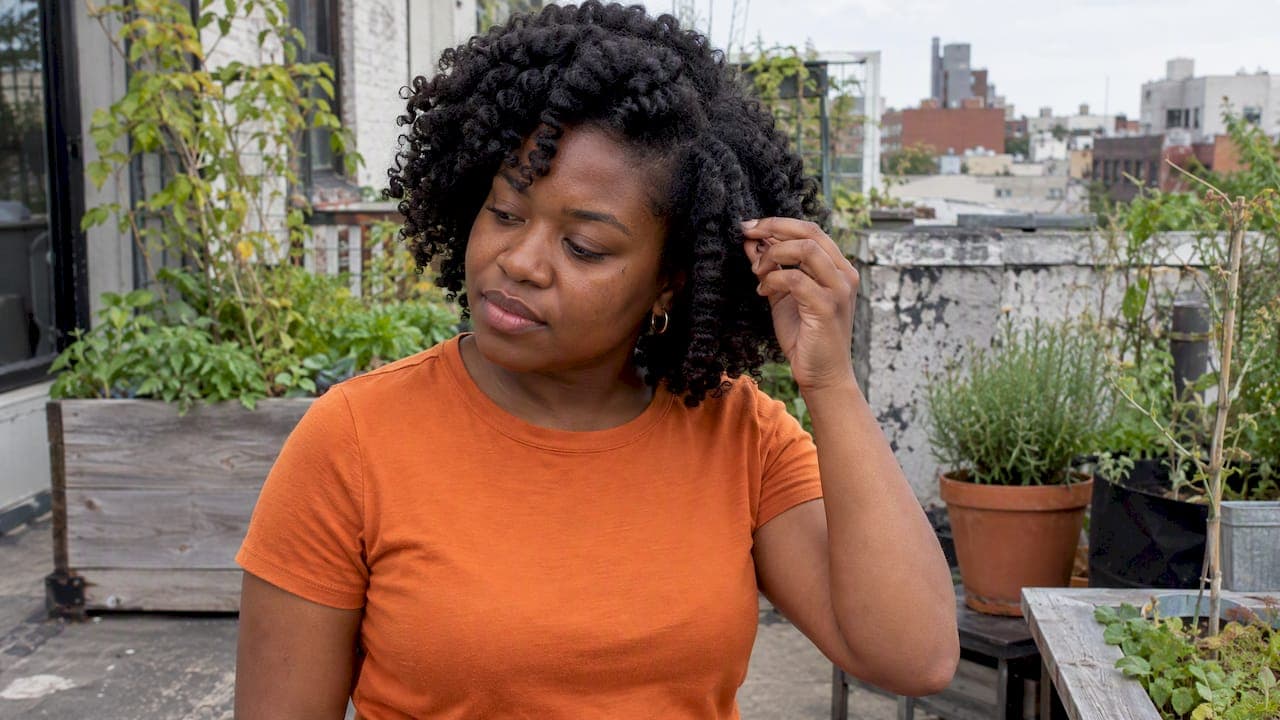
The best 4C hairstyles are two-strand twists, knotless braids, mini twists, puffs, Bantu knots, and wash-and-go or finger coils, because they balance protection with low manipulation. We picked these styles based on two things: how well they protect your ends and edges, and how easy they are to maintain day to day. Below, you'll find quick picks, how-tos, and the care rules that keep your scalp happy.
TL;DR:
- Knotless braids need at least 4 inches of hair; gradual extension feed and loose hairline parts reduce pulling, and proper installs can last six weeks.
- Sharp pain, headaches, tenderness, or bumps signal excessive tension; take the style down within a day or two if it causes real pain.
- Twists last one to three weeks, mini twists two to four weeks, while wash and go styles need refreshing every three to seven days.
- Protective styles still need gentle scalp cleansing, light moisture every few days, satin at night, and rest weeks between heavy installs to protect edges.
Table of Contents
- Styles at a Glance for 4C Hair
- How to Install the Top Six 4C Styles
- Keeping Your Scalp Safe While You Style
- Seeing Your Style Before You Commit
- A Note on Scalp Comfort Over Everything
- Try Before You Twist: Preview Your Next Style
- FAQ
- Sources
Styles at a Glance for 4C Hair
Some days call for a five-minute puff. Other weeks, you need something that survives a beach trip, a gym routine, and three wash days without falling apart. Here's how the most popular 4C styles stack up.
- Two-strand twists: Low-manipulation and versatile, these work for stretched definition or as a twist-out base, and typically last 1 to 3 weeks.
- Mini twists: Small, neat twists that suit shorter to medium lengths and offer protection for 2 to 4 weeks with minimal daily fuss.
- Knotless braids: A tension-friendlier take on classic braids, favored for long wear of 6 weeks or more when installed correctly.
- Loose box braids: Similar protection to knotless braids but with slightly more bulk at the root, lasting 4 to 6 weeks.
- Flat twists: Sit close to the scalp, work well under wigs or on their own, and hold 1 to 2 weeks.
- Bantu knots: Protective and sculptural, these can stay in for several days before you unravel them into a knot-out.
- Bantu knot-out: A defined, voluminous curl pattern that lasts 3 to 5 days before it loosens.
- High puff: A go-to daily style that takes minutes and protects ends when wrapped in a satin-lined band.
- Low puff: Gentler on edges than a high puff, good for low-manipulation days.
- Wash-and-go: Daily definition style, best for shorter maintenance windows of 3 to 7 days between refreshes.
- Twist-out: A soft, elongated curl pattern from twists, lasting 3 to 6 days.
- Braid-out: Similar to a twist-out but with a crimped texture, holding 3 to 6 days.
- Finger coils: Defined, individual curls for shorter hair or special occasions, lasting 2 to 5 days.
- Tucked updo: A protective, polished option for stretching styles between installs.
Knotless braids, mini twists, and Bantu knots are your most protective, low-tension picks. Wash-and-go, puffs, and twist-outs are your easiest everyday options when you want definition without committing to an install.
How to Install the Top Six 4C Styles
Each of these styles has its own rhythm, but they all start the same way: clean, well-moisturized, detangled hair—check out this guide on how to do a hair porosity test to tailor your moisture routine for best results. Skipping that step is where most installs go wrong.
- Two-strand twists. Best for medium to long lengths with moderate density. Section hair into squares, apply a leave-in conditioner followed by a twisting cream, and twist each section from root to tip. Finish with a light oil to seal ends. Expect 2 to 4 hours depending on twist size.
- Knotless braids. Works on nearly any length once hair is at least 4 inches long. Feed in extensions gradually instead of starting with a knot at the root, keep parts no smaller than needed for your desired thickness, and ask your stylist for "looser parts along the hairline." This single request reduces pulling where traction alopecia starts most often.
- Mini twists. Best for shorter to medium density hair that holds twists well. Part in small, even sections, apply a curl cream, and twist tightly enough to hold shape without tugging the scalp.
- High puff. Fits any length once hair can gather at the crown. Smooth edges with a light gel, gather hair with a satin-lined elastic, and avoid pulling the band tight enough to leave a dent.
- Bantu knots (and the knot-out). Works on medium to long hair. Twist small sections, then wind each one around itself into a flat coil. Secure with a bobby pin if needed and leave in overnight for the knot-out version.
- Wash-and-go or finger coils. Best for hair with strong curl definition already. Apply a leave-in, a curl-defining cream, and a gel on wet hair, then either let curls clump naturally or coil each section individually with your fingers.
Pro Tip: Ask your stylist to check tension by gently pulling the braid or twist right after install. If it causes sharp pain rather than mild pressure, it needs to be redone looser.
Pro Tip: Stretching your hair slightly before twisting or braiding (with a blow-dryer on low heat or a simple banding method) makes styles last longer because less shrinkage means less bulk at the root.

Keeping Your Scalp Safe While You Style
Protective styles only protect when they're installed without tension. According to the American Academy of Dermatology, tight hairstyles worn repeatedly can cause traction alopecia, and styles should generally come out within 6 to 8 weeks.
Watch for these signs that a style is too tight:
- Sharp pain during or right after installation, not just mild pressure
- Headaches that start soon after your hair is braided or twisted
- Persistent tenderness along the hairline or at the crown
- Small bumps or redness at the base of individual braids or twists
Nightly and daily care that protects your progress:
- Sleep on a satin or silk pillowcase, or wrap hair in a satin scarf, to cut down on friction
- Moisturize your scalp and edges every few days with a light oil
- Cleanse your scalp gently with a diluted shampoo or scalp refresher, even with braids in
- Give your edges a break by varying part placement each time you reinstall a style
DermNet NZ lists tight braids, weaves, and chignons worn repeatedly as known risk factors, and recommends switching to looser styles or taking a rest period when you notice tension building. If a style causes real pain, take it down within the first day or two rather than waiting it out.
Build in rest weeks between heavy protective styles, especially if you're moving from one tight install straight into another. Our protective hairstyle guide covers more on rotation, and our loc maintenance guide is useful if you're managing locs alongside twists or braids.
Seeing Your Style Before You Commit
Guessing how a part width, puff size, or braid scale will look on your own face is frustrating, and it's the reason so many installs end in regret. Virtual try-on tools let you preview scale, parting, length, and edge presentation on your actual photo before you sit in a chair or spend on extensions.
Three experiments worth running before your next appointment:
- Compare a high puff against a twist-out side by side to see which shape suits your face
- Test a few braid part widths to settle on a scale before committing to knotless braids
- Preview knotless braids next to loose box braids to judge bulk and length difference
Testing a style on your own photo first removes a lot of the guesswork that usually only shows up after the chair turns.
A Note on Scalp Comfort Over Everything
We've learned the hard way that a style isn't worth it if your scalp is screaming by day two. Beauty and comfort aren't opposites. Rotate your styles honestly, give your edges room to breathe, and start with lower-tension options like twists or a loose puff before moving into anything tighter. Your hair will thank you for the patience.
— Christelle
Try Before You Twist: Preview Your Next Style
Choosing a style shouldn't feel like a gamble. With StyleMyCrown, you can preview your next look across our catalog of curated styles using your own photo, with 2 complimentary credits to test a few options risk-free before you book an appointment or buy extensions.
| Plan | Price |
|---|---|
| 1 Week Trial | See current prices on the pricing page |
| 4 Week Plan | See current prices on the pricing page |
Start with a free preview on our style catalog, or check pricing plans if you're ready to explore more looks.
FAQ
Is 4C the rarest hair type?
No, 4C is not classified as rare. It's one of several curl pattern categories within the Andre Walker typing system, which is a shorthand rather than a clinical measure of hair texture.
What is the best style for 4C hair?
There's no single best style, since the right choice depends on your length, density, and how much maintenance time you have. Two-strand twists, knotless braids, and mini twists are consistently recommended as protective and low-manipulation picks for 4C hair.
What braids are best for 4C hair?
Knotless braids tend to be gentler on the scalp than traditional box braids because they skip the tight knot at the root. They're commonly recommended for long-wear protection of six weeks or more when installed with proper tension.
Is 4C hair tight or loose?
4C hair has a tight curl pattern with a lot of shrinkage, which is why many people stretch it before styling. This tight curl structure is also part of why gentle detangling and moisture matter so much before any install.
Sources
- Hairstyles and hair loss guidance — American Academy of Dermatology (AAD)
- 4C Hairstyles: 17 Gorgeous Natural Hair Ideas for 2026 — CurlyNikki
- Traction alopecia — DermNet NZ