
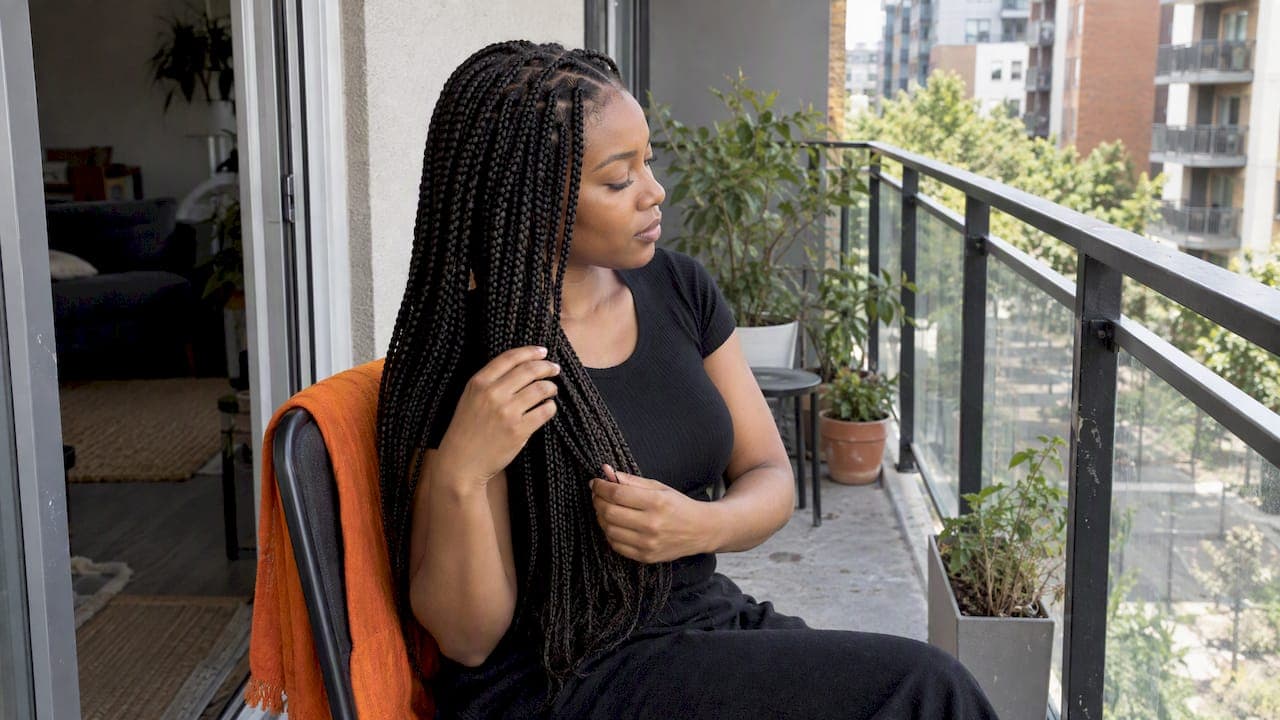
Knotless braids, goddess/boho braids, jumbo braids, micro braids, bob-length braids, and half-up styles cover almost every box braid look worth trying this year. The rule of thumb: let your scalp sensitivity and how much maintenance time you actually have decide your size and technique, not just the photo you screenshotted. From there, the details of sizing, upkeep, and safety fall into place.
TL;DR:
- Knotless box braids reduce tension at the scalp and are ideal for sensitive edges or scalp tenderness compared to traditional knotted styles.
- Micro and small braids offer longer-lasting wear but require significantly more installation time and attention to scalp care.
- Overstaying braids beyond six to eight weeks increases the risk of scalp stress, itching, and visible thinning, especially with tight or high-tension styles.
- Human hair blends better for curly or styled finishes and takes color naturally, whereas synthetic hair is more affordable and holds styles more sharply.
- Virtual try-on tools can help preview braid size, length, and color to ensure the style suits your face before booking an appointment.
Table of Contents
- 1. Styles that cover every mood and occasion
- 2. How to choose size, length, and finish for your routine
- 3. Keeping braids fresh without wearing out your hair
- 4. What dermatologists want you to know about tension and traction
- 5. Test the look before you commit with virtual try-on
- 6. Where box braids are headed and what still matters most
- Preview your next style before you book a chair
- FAQ
- Sources
1. Styles that cover every mood and occasion
Box braids have grown into a whole family of looks, and picking the right one starts with knowing what each style actually asks of your scalp and your schedule.
- Knotless box braids start with your natural hair and feed in extensions gradually instead of anchoring a tight knot at the root, which is why they have become the go-to for anyone with sensitive edges or a history of tenderness after installs. The feed-in method also lays flatter and looks more natural at the part.
- Goddess and boho braids mix braids with loose, curly pieces for a romantic, undone finish. Stylists increasingly use human hair and "miracle knot" crochet techniques to blend texture more convincingly, a shift that Allure traces to a broader move toward personalized, wearable braid art. These looks shine for weddings, vacations, or anytime you want softness over structure.
- Jumbo and XL braids are the fastest to install and make the biggest visual statement, but the size means more weight per braid pulling on your roots. If your scalp tends to feel tight easily, jumbo may not be your friendliest option even though it saves hours in the chair.
- Micro and small braids deliver that sleek, long-lasting look people associate with "finished" box braids, and they tend to hold up longer between touch-ups. The trade-off is time: a full head of micros can take considerably longer to install than jumbo or medium sizes, according to trend coverage from Allure on how size affects both cost and appointment length.
- Bob and lob box braids keep things light, both in weight and in commitment. They work well for anyone managing a sensitive scalp, a packed event calendar, or simply a preference for lower-maintenance protective styling.
- Half-up styles, braided ponytails, and buns give you quick ways to change your daily look without redoing the install. They are also one of the gentlest options for sleep and workouts since they reduce friction against your pillow or collar.
- Finishing details separate a good install from a memorable one: sealed versus curly ends, color melts and ombré, beaded accents, wrapped sections, and triangle parts instead of the classic box part. Galleries from Glamour show how much these small choices shape the overall vibe, from editorial and sleek to playful and textured.
Our guide to knotless braid styles walks through more variations if that technique is calling your name, and our natural updo roundup is worth a look if half-up or bun styles are more your speed.
2. How to choose size, length, and finish for your routine
Picking a size means weighing four things against each other: install time, weight on your scalp, the look you want, and how long the style will realistically hold up. Jumbo braids install fast and look bold but carry more tension per strand. Micro braids take much longer in the chair but reward you with length of wear. Medium sizes split the difference for most first-timers.
Length matters too. Longer braids mean more hair, more time, and often more cost, so set your appointment expectations accordingly rather than assuming your stylist can work magic in half the time.
Human hair blends better for curly, goddess-style finishes and takes color more naturally, while synthetic hair is typically more affordable and holds crisp, sleek styles well.
Before your appointment, bring:
- Clear photos of your desired size, length, and color
- Notes on any scalp sensitivity, past traction issues, or areas needing extra care
- Your preference for knotless versus traditional technique
- A realistic sense of how much maintenance time you can commit to weekly
3. Keeping braids fresh without wearing out your hair
Your scalp still needs attention even under braids, and a few consistent habits make the difference between braids that look tired by week two and ones that still look sharp a month in.
- Cleanse every one to two weeks using a diluted shampoo rinse at the scalp, or a dry shampoo between full washes to control buildup.
- Moisturize your scalp a few times a week with a light oil or leave-in spray, focusing on the roots rather than soaking the braided hair itself.
- Protect your style at night with a satin bonnet or pillowcase, and consider a loose pineapple or braided-down style to cut friction.
- Watch for frizzing edges or a matted look near the roots as signs it's time for a refresh or removal.
Pro Tip: Keep braids in for no longer than six to eight weeks, and sooner if your scalp feels tight or itchy, since overstaying a style stresses both your hair and your patience.
4. What dermatologists want you to know about tension and traction
Traction alopecia develops from repeated pulling on the hair follicle, and tight braids, weaves, and ponytails are named among the common causes in medical literature, according to StatPearls on NCBI. The damage builds gradually, which is exactly why it is easy to miss until regrowth becomes visible.
A dermatology review in the Journal of the American Academy of Dermatology recommends sorting hairstyling practices into risk categories and rotating high-tension styles with gentler ones, rather than wearing the same tight install back to back.
Knotless techniques reduce tension at the root compared with traditional knotted installs, making them a sound choice if you've felt soreness before. Watch for red flags: persistent pain, visible thinning at the hairline, or small bumps along the part. Any of those is a sign to loosen the style or give your scalp a break with flat twists or a crochet method instead.

5. Test the look before you commit with virtual try-on
Before sitting in a chair for hours, you can preview how a style actually suits your face and proportions. Virtual try-on technology shows braid size, length, color, and even updo variations on your own photo, so you walk into your appointment with a clear reference instead of a vague idea.
A simple approach: shortlist two or three styles from this list, upload a photo, and compare how jumbo versus medium, or a color melt versus solid black, changes your overall look.

6. Where box braids are headed and what still matters most
We're watching texture-first, wearable-art braiding take over, with hybrid and miracle-knot methods blurring the line between "braided" and "curled." That shift is exciting, but it doesn't change the fundamentals: rotate your styles, listen to your scalp, and give your edges breaks between installs.
Before you book anything, preview it. A style only earns its place in your rotation if it looks right on you, not just on the model in the photo.
— Christelle
Preview your next style before you book a chair
Choosing a box braid style from a gallery is one thing. Seeing it on your actual face, with your actual proportions, is another. Our virtual try-on tool lets you upload a photo and test braid size, length, and color across a catalog designed for Black and textured hair, so you can decide before committing to the chair.
We offer two complimentary credits to start, and after that you can choose the 1 Week Trial at $17.48 per week or the 4 Week Plan at $38.73 per 4 weeks, both listed on our pricing page. If you'd rather browse first, our style catalog has the full range waiting. And if you're ready to book the actual install, Awani Hair Braiding specializes in neat, scalp-comfortable box braids and knotless installs.
This article is general information, not a substitute for advice from a qualified doctor. Consult a qualified healthcare professional about your own circumstances before acting on anything here.
FAQ
Are box braids still in style?
Yes, box braids remain one of the most consistently popular protective styles, with current trends leaning toward knotless technique, hybrid goddess finishes, and personalized color blends rather than a single uniform look.
What are the best types of braids?
The best type depends on your scalp tolerance and schedule: knotless braids suit sensitive scalps, jumbo braids suit quick installs, and micro braids suit anyone prioritizing longevity over install time.
What's better, box braids or knotless braids?
Knotless braids are a technique within the box braid family, not a separate style, and they generally create less tension at the root than traditional knotted box braids, making them a gentler option for sensitive scalps.
Are box braids a Black hairstyle?
Box braids have deep roots in Black hair culture and remain closely associated with Black hairstyling traditions, though people of many backgrounds now wear versions of the style.
How long should I keep box braids in?
Most guidance points to a maximum of six to eight weeks, with sooner removal if you notice scalp tightness, itching, or visible thinning at the hairline.
Sources
- Boho braids give classic box braids an effortless upgrade | Allure
- Traction alopecia - StatPearls - NCBI Bookshelf
- All hairstyles are not created equal: What the dermatologist needs to know about black hairstyling practices and the risk of traction alopecia | JAAD